
Vršič Pass by Bike: Bovec to the Russian Chapel
Alpine Slovenia
Where to base yourself
Search places to stay near here and book directly on Booking.com.
Find a place to stayVršič Pass by Bike: Bovec to the Russian Chapel
Quick Overview – Vršič Pass from Bovec
The hardest ride on this site: 39 km one way from Bovec up the Soča valley to Trenta, then the serpentine climb over the Vršič Pass at 1,611 m — the highest road pass in Slovenia — and a short drop down the far side to the Russian Chapel and Mihov dom. About 1,340 m of climbing, all on tarmac, with 26 numbered hairpins up from Trenta and the first of the 24 cobbled hairpins of the old Russian Road on the way down.
- Type: one-way road climb over an alpine pass (regional road 206, Bovec–Kranjska Gora), ending at Mihov dom on the north side
- Region: Alpine Slovenia (Bovec, Soča, Trenta, Vršič Pass, Kranjska Gora side)
- Works well with: a road bike with low gearing (32 or 34 on the back), an early start to beat the buses, a layer for the descent, and the summer shuttle bus for the way back
Trail stats
- Distance: 38.75 km one way, Bovec to Mihov dom, over the Vršič Pass
- Elevation gain: ~1,340 m climbing (about 460 m at Bovec, 1,611 m at the pass); ~700 m of descent on the far side
- Time: 2.5–4 hours of riding one way; a full day with the return, stops and the chapel
- Difficulty: Hard. There is no climb like it in this section — 20 flat km to warm up, then the pass proper: 26 hairpins from Trenta, an average around 7% with ramps of 11–12%, at real altitude.
- Surface: all paved. Smooth asphalt to the pass; the hairpin bends on the descent to the Russian Chapel are cobbled (river stone), rough and slick when wet.
What to expect
Vršič is the classic road climb of the Julian Alps and the one most riders in the Soča valley build a day around. Built by Russian prisoners of war in 1915–17 as a military supply route, it links the Soča and Sava valleys over a 1,611 m saddle between Mojstrovka and Prisojnik. The road that carries the traffic today is smooth asphalt; the original cobbled surface survives only on the hairpin bends of the north (Kranjska Gora) side, and that is the side the Russian Chapel stands on.
The honest points: this is a hard day, and the road is busy. From late morning in summer the pass carries a steady stream of tour buses, motorhomes and motorbikes on a narrow road with blind hairpins and no shoulder — it is the reason to be on it early or not at all. The climb from Trenta is short but relentless, at altitude, with little shade and no water above the village. And because it ends at Mihov dom on the far side, you have to plan the way back: retrace over the pass, roll down to Kranjska Gora, or use the summer bus.
Route in detail
1) Bovec to the Great Soča Gorge (0–10 km)
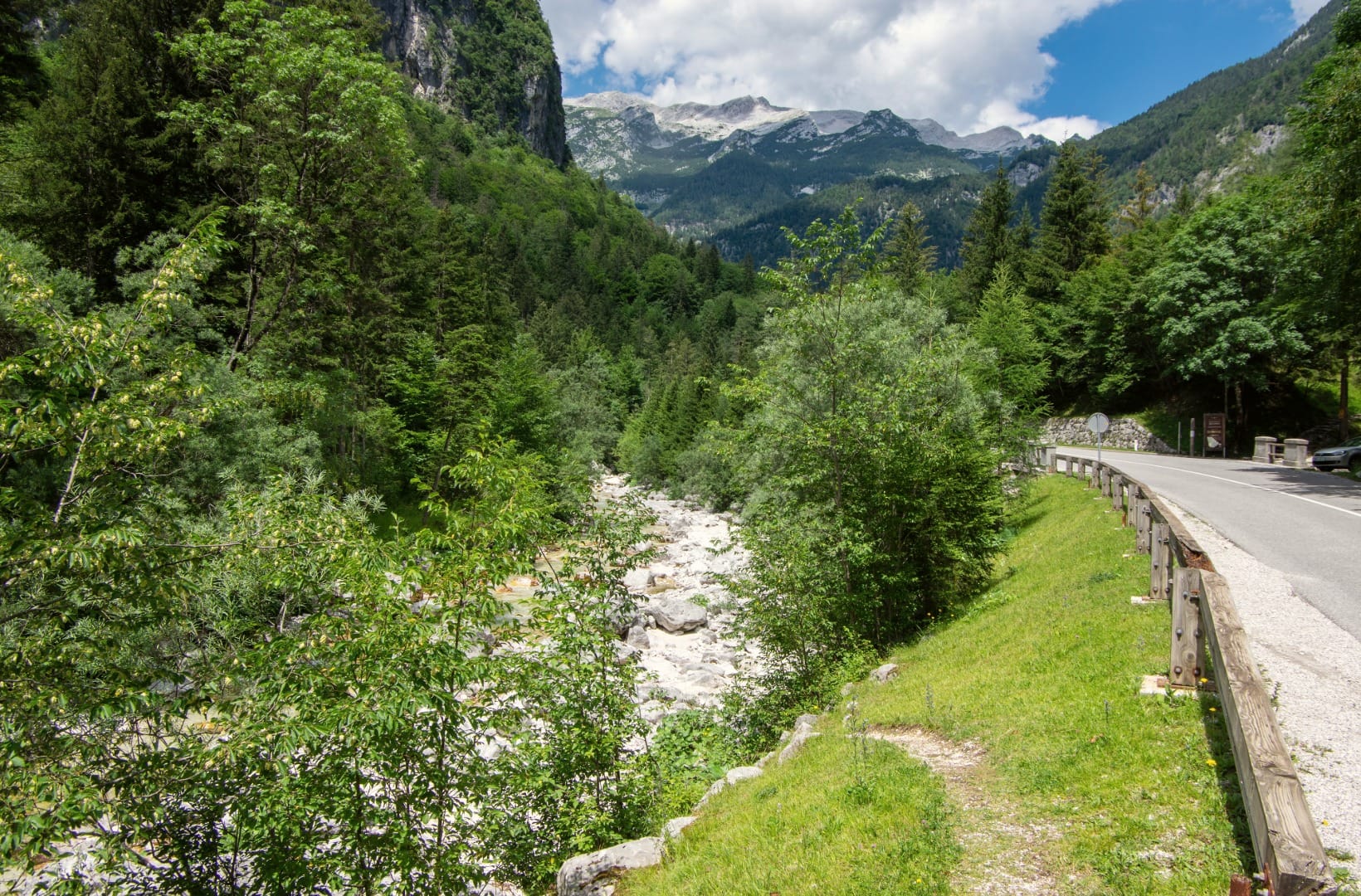
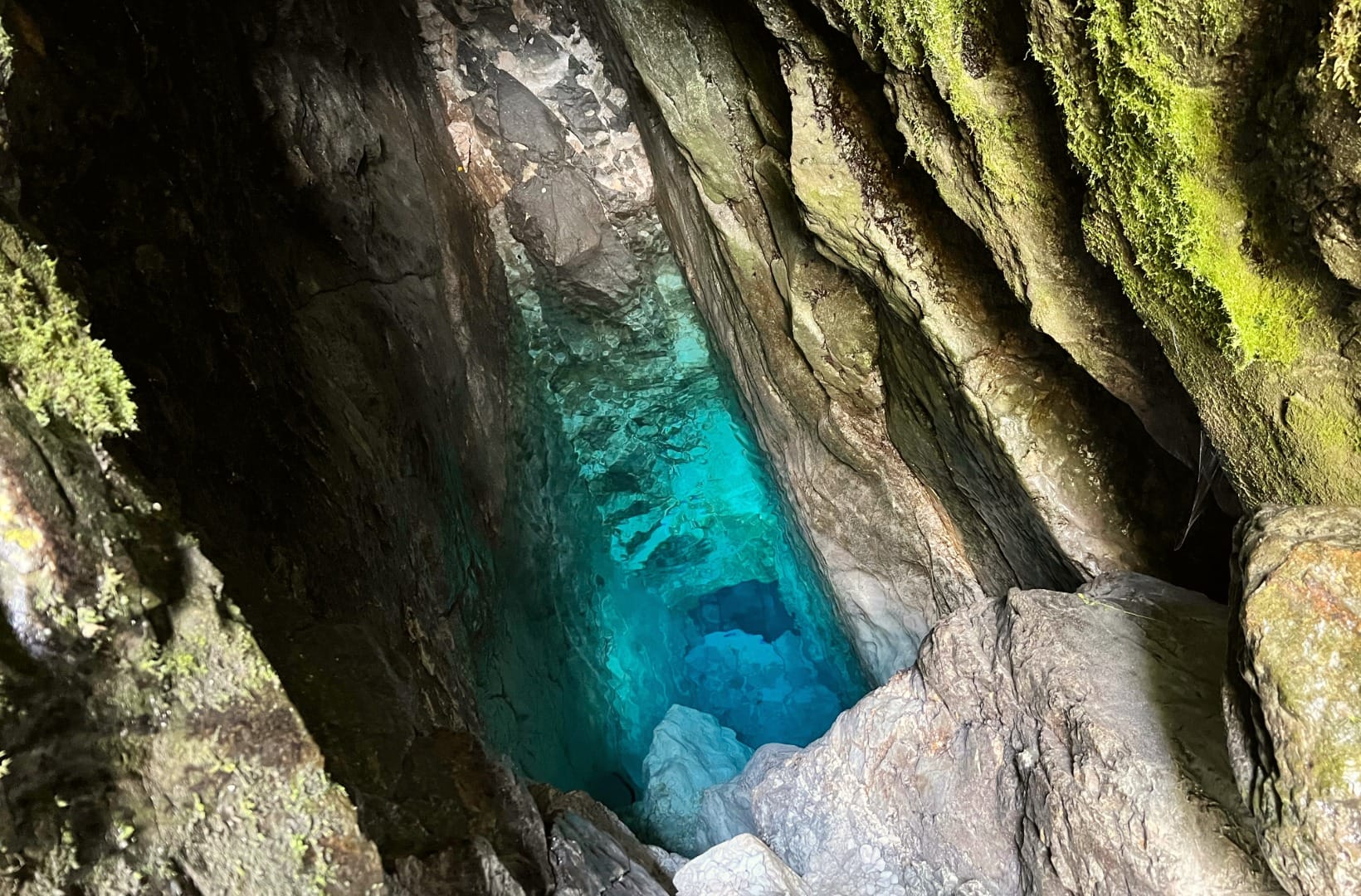
The first 10 km out of Bovec are a warm-up: a gently rising valley road along the right bank of the Soča, past the turn for the Predel Pass, through meadows and pine. At about km 10 the river squeezes into the Velika korita, the Great Soča Gorge — a 750 m slot of turquoise water and undercut rock, crossed by a footbridge. It is a good place to stop, look down, and on a hot day swim in the calmer pools just upstream.
2) Soča village to Trenta (10–20 km)
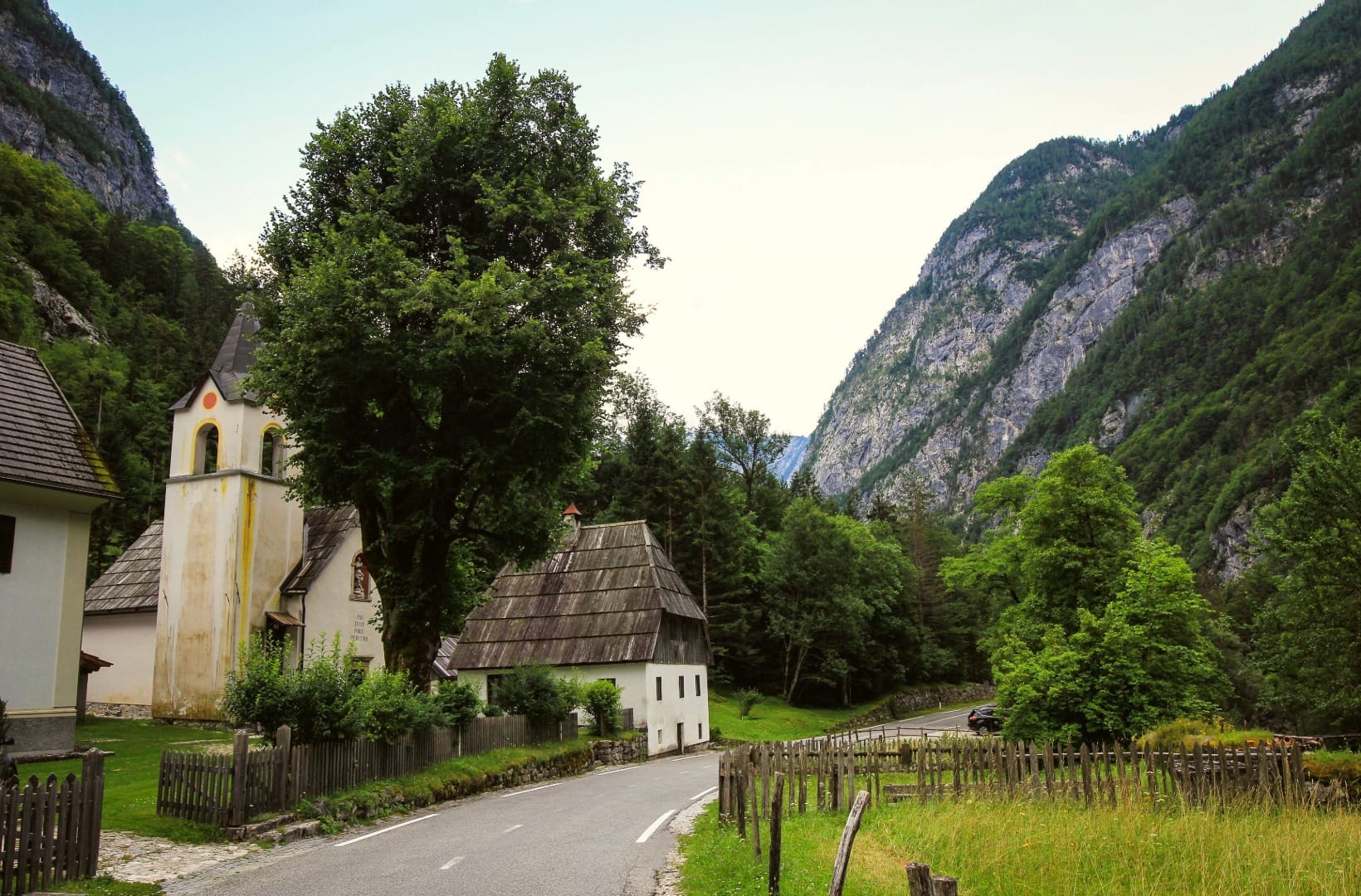
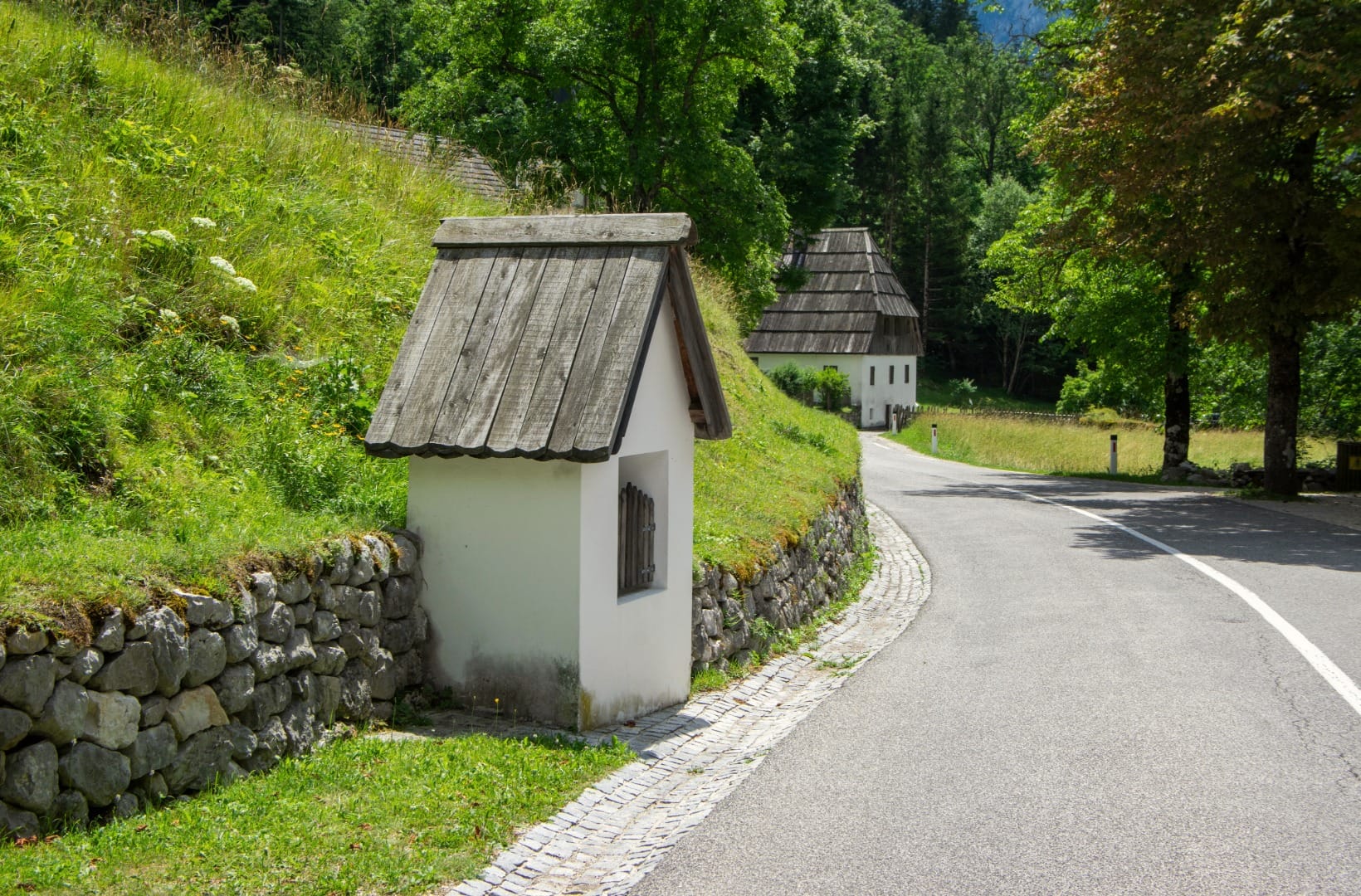
Beyond the gorge the valley opens again through the scattered hamlets of Soča — a small church, shingle-roofed houses, wayside shrines on the bends — and then narrows into Trenta under vertical grey walls. Trenta is the last village and the place to fill bottles and eat: it has Dom Trenta, the Triglav National Park information centre with the Trenta Museum, and the Alpinum Juliana botanical garden, a small rock garden of the region’s alpine plants. From here the climbing starts.
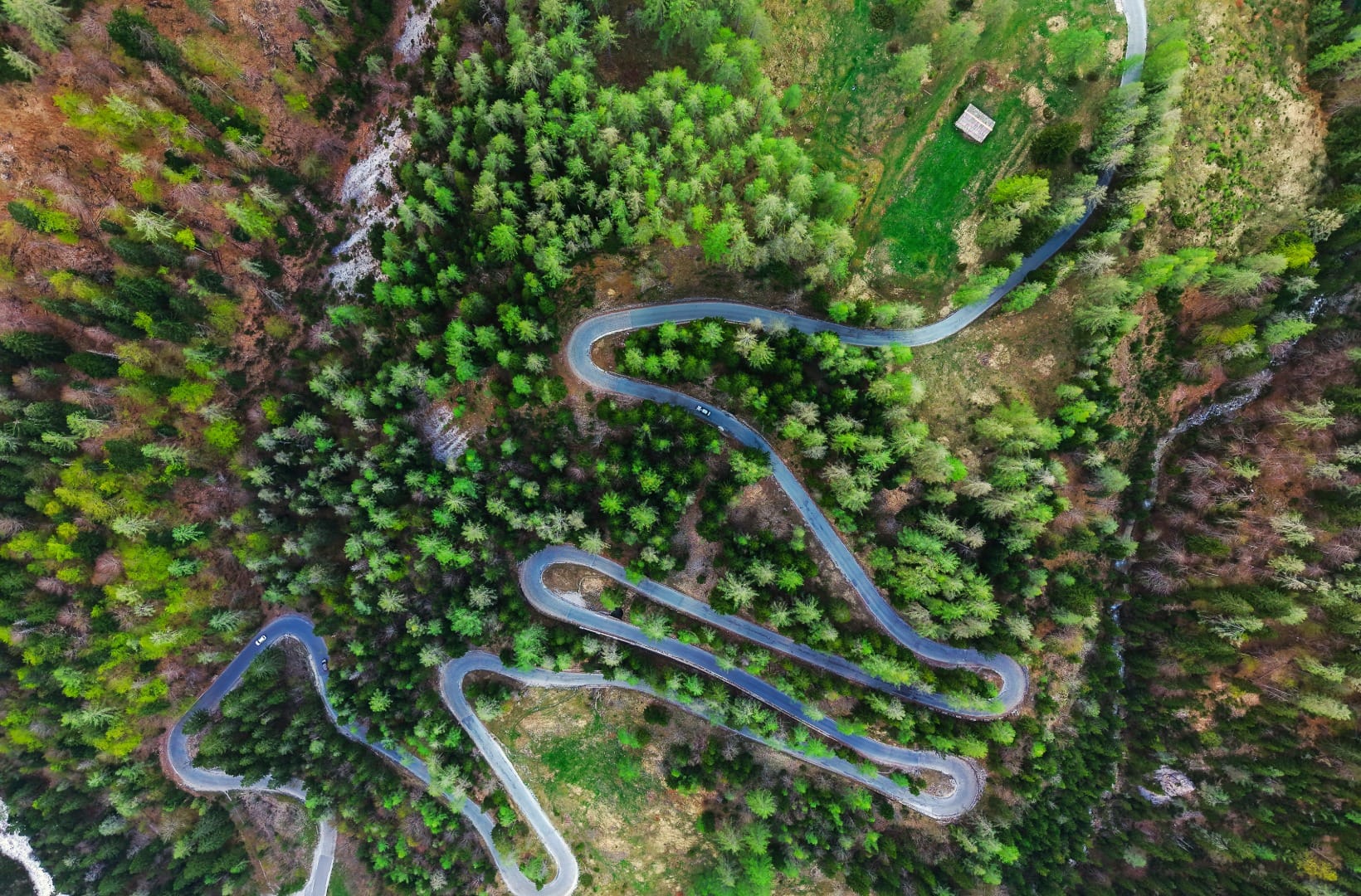
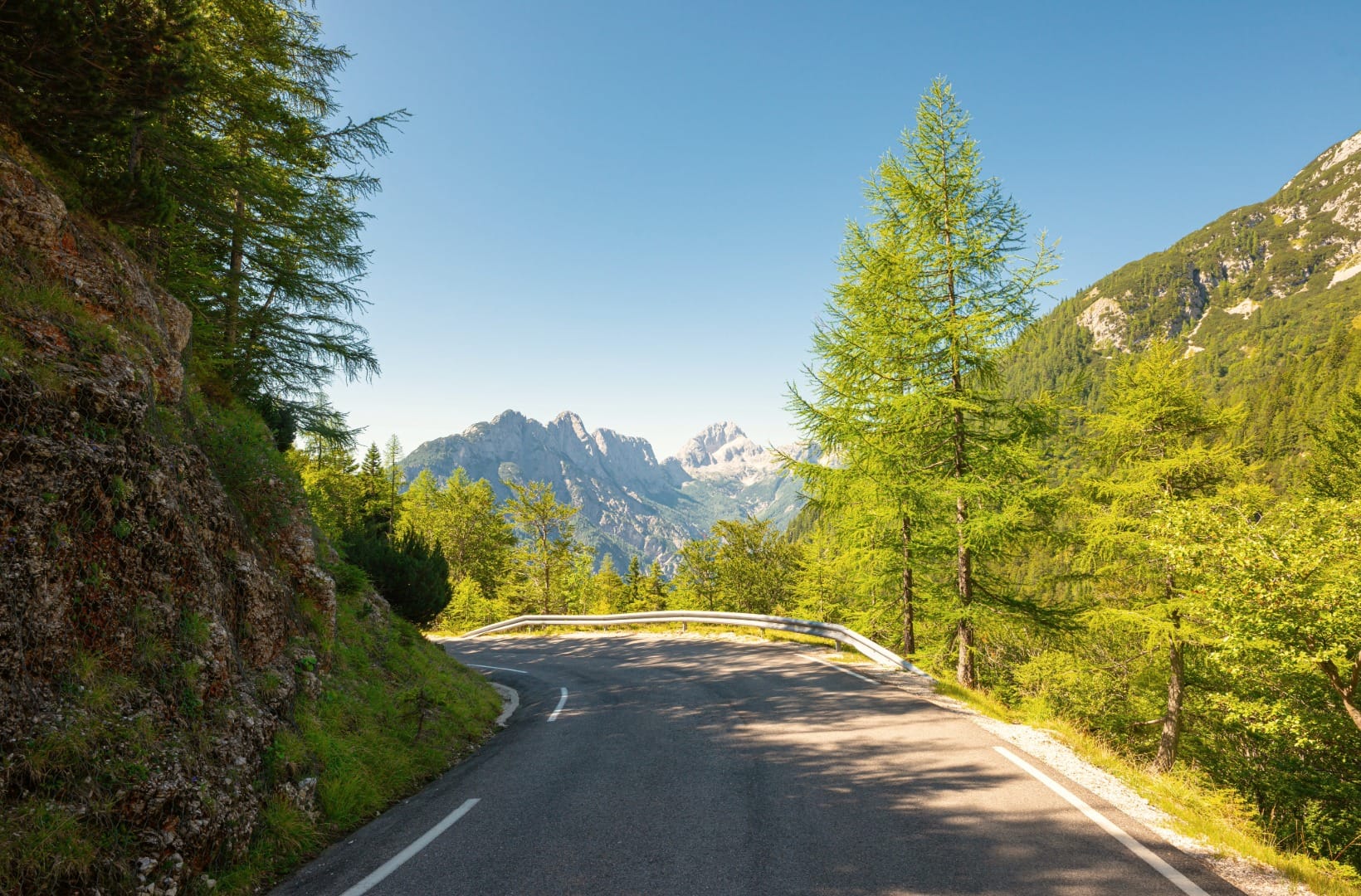
3) Trenta to the pass: the south hairpins (20–33 km)
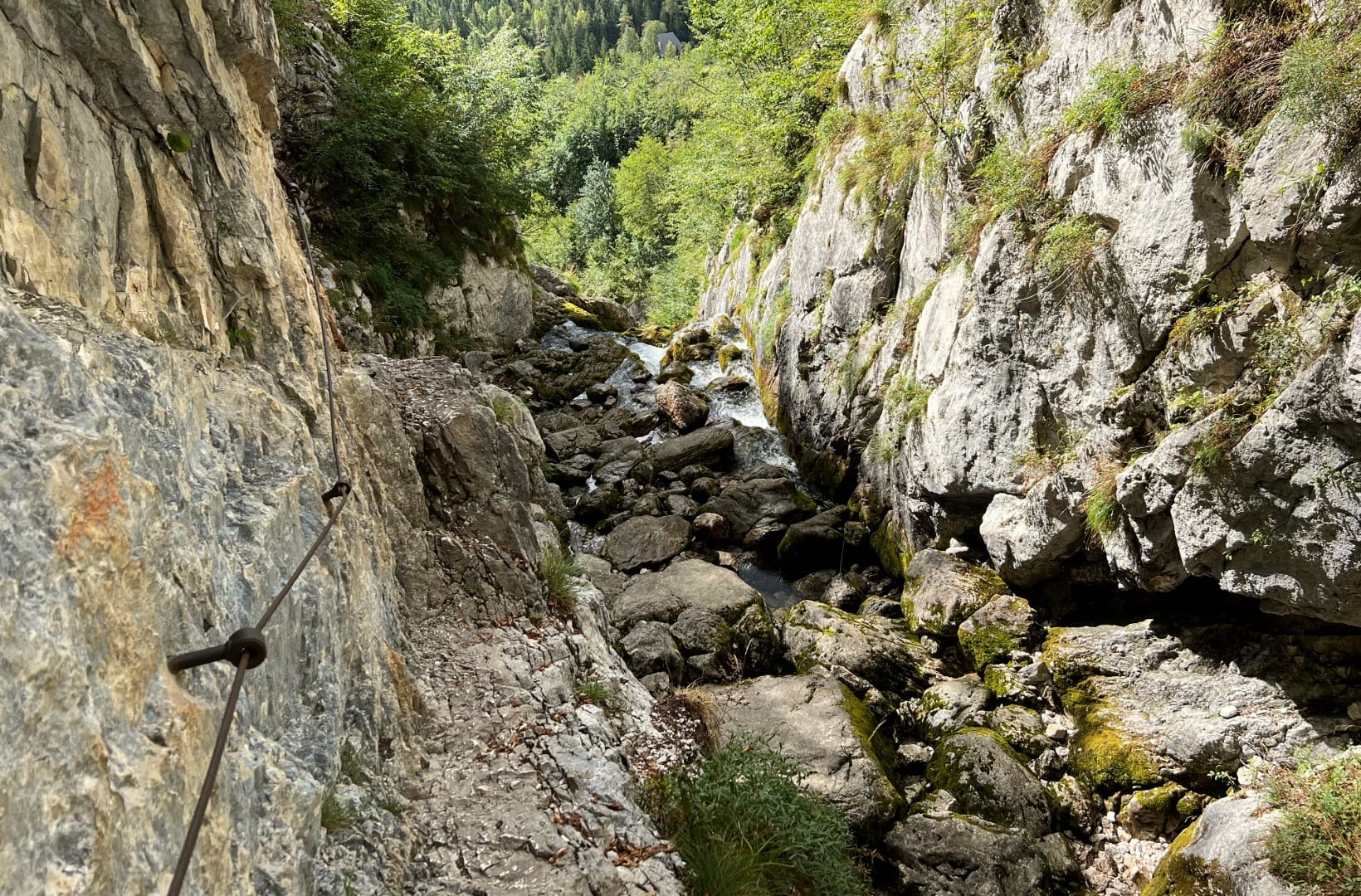
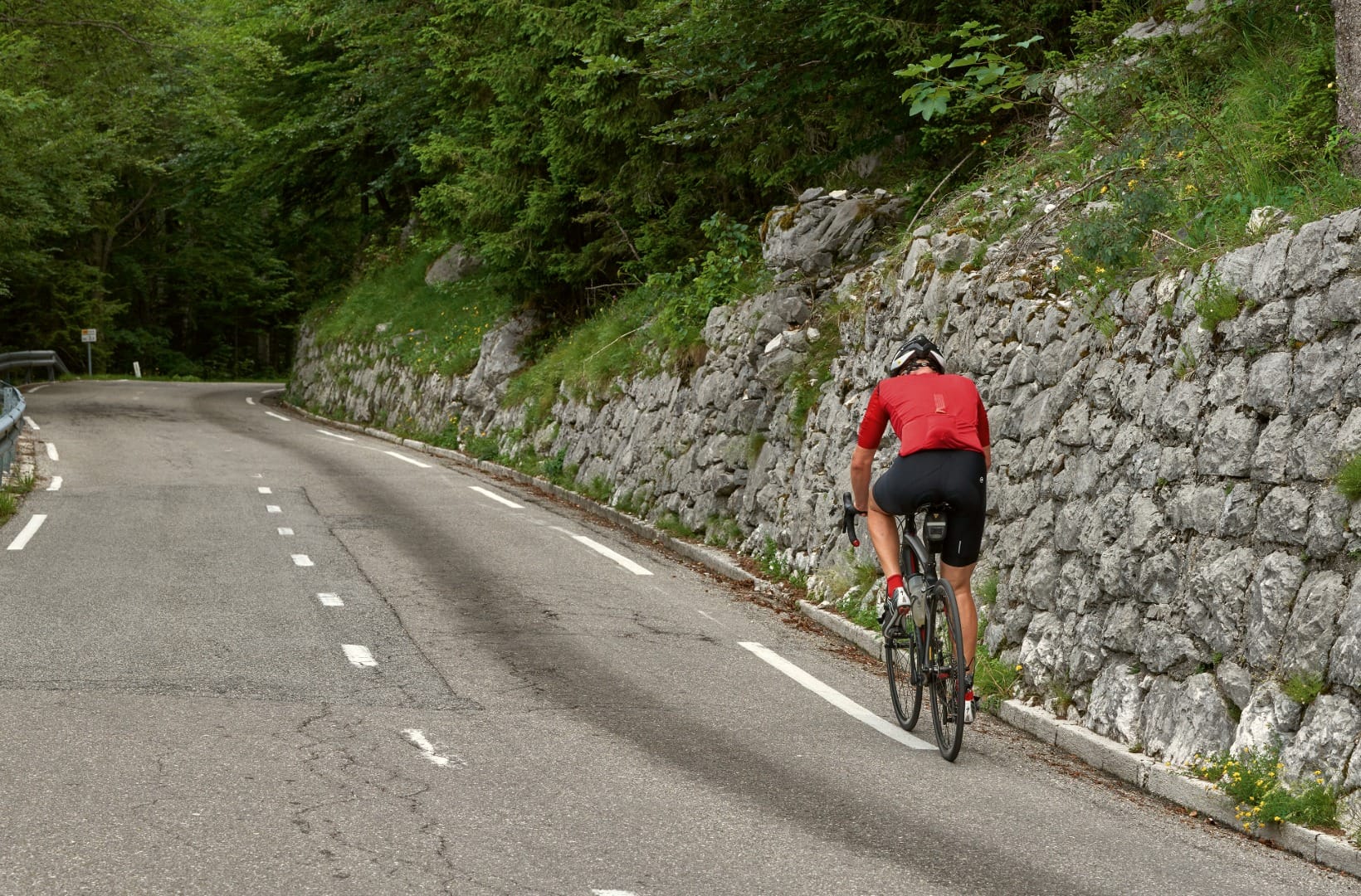
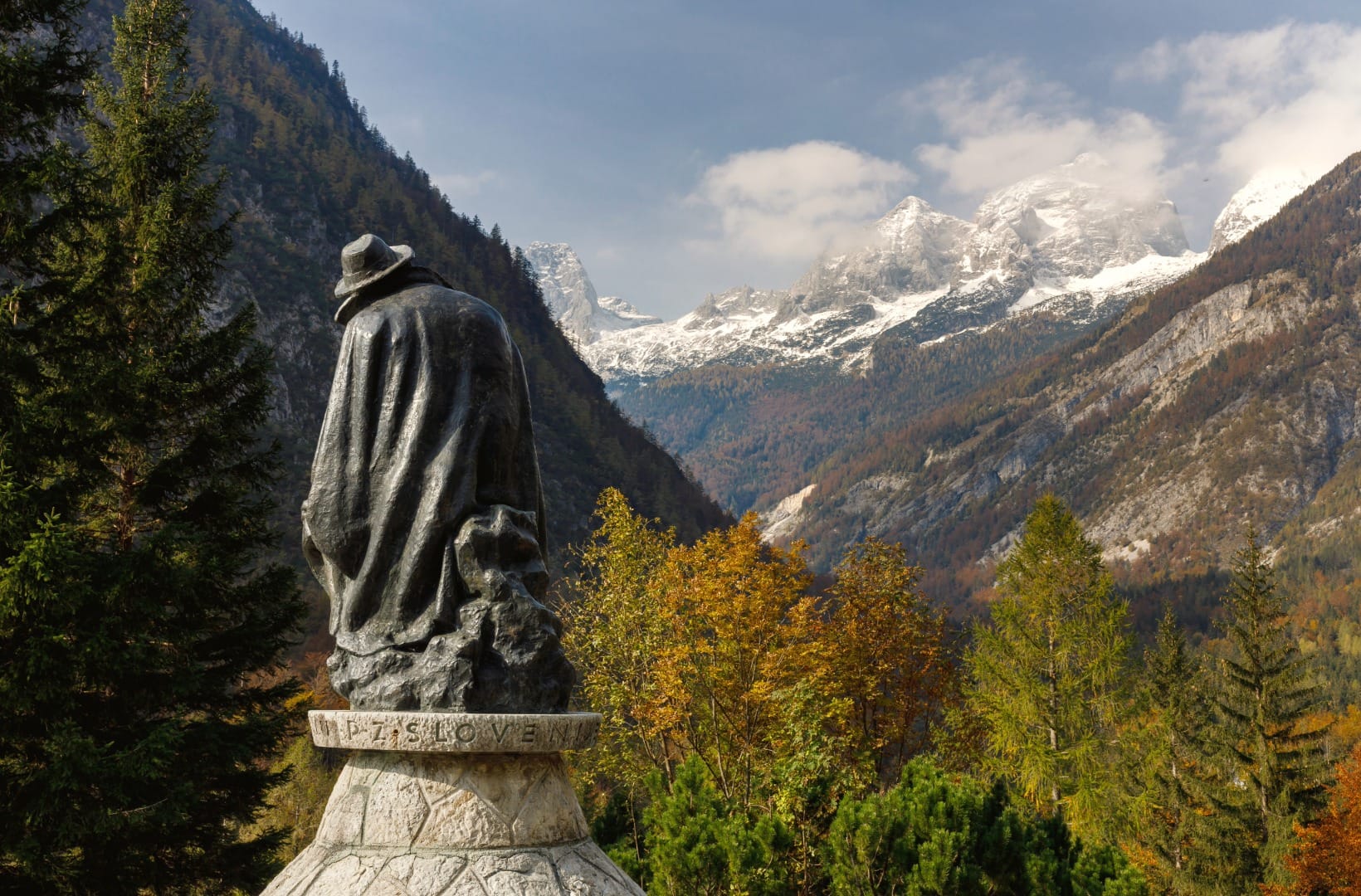
The serpentine road climbs out of Trenta in 26 numbered hairpins, counting down toward the top. The gradient sits around 7% but stiffens to 11–12% on the ramps between bends, and there is no real respite for 13 km. The forest thins to larch and then to open scree, with Jalovec and Prisojnik filling the sky. Just below the pass, on a shelf to the right, stands the bronze monument to Julius Kugy, the mountaineer who mapped and wrote this valley, facing the peaks he climbed.
4) Vršič Pass, 1,611 m (km 33)
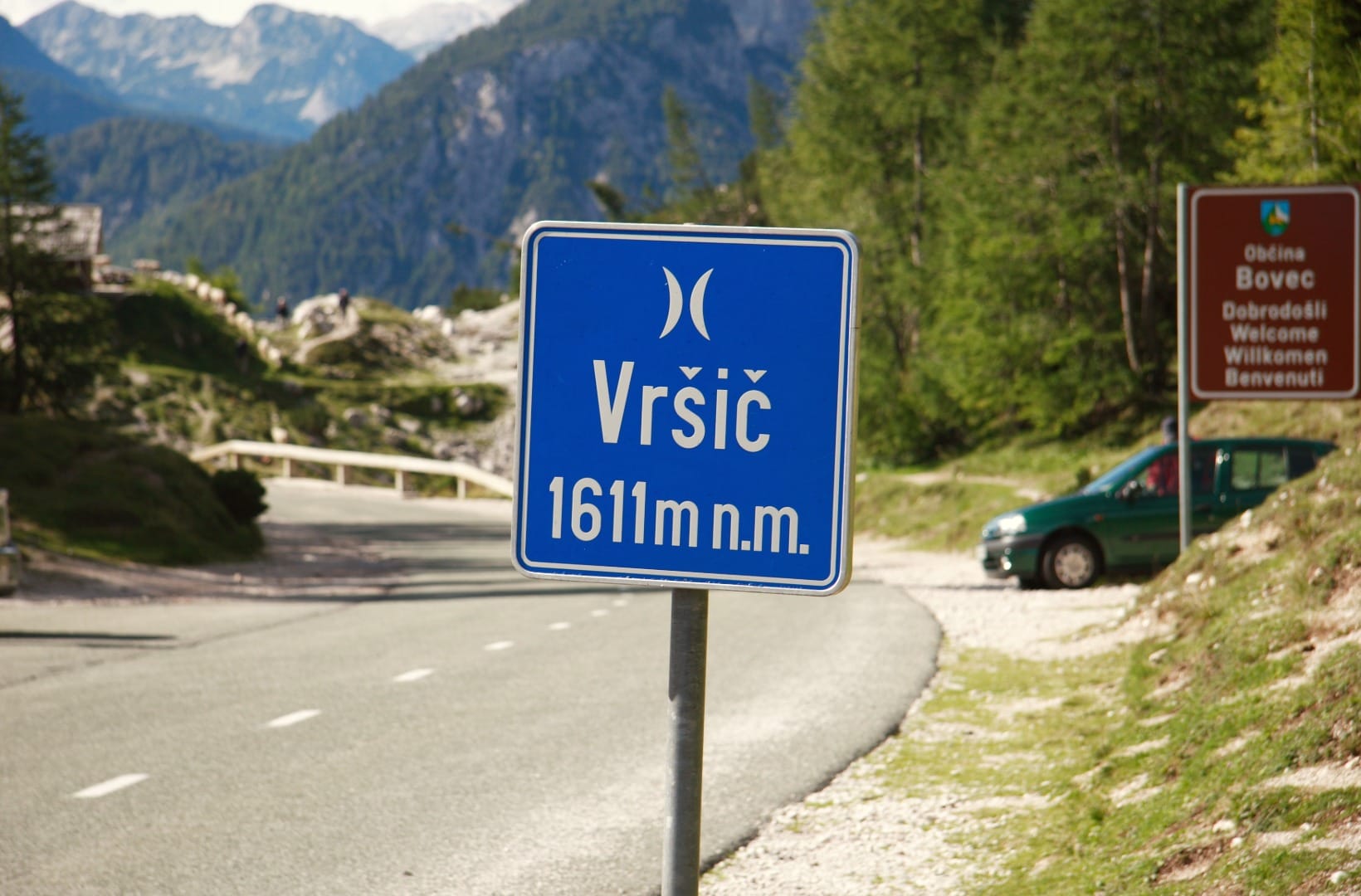
The pass is a broad saddle with two huts — Tičarjev dom and Poštarski dom — a large car park, and the blue sign that everyone photographs. Mojstrovka rises to the west, Prisojnik to the east, its natural rock window visible on a clear day. Have something to eat here: the descent is short, and Mihov dom, where the ride ends, is a working hut but a small one.
5) Over the top: the cobbled hairpins and the Russian Chapel (33–38.75 km)
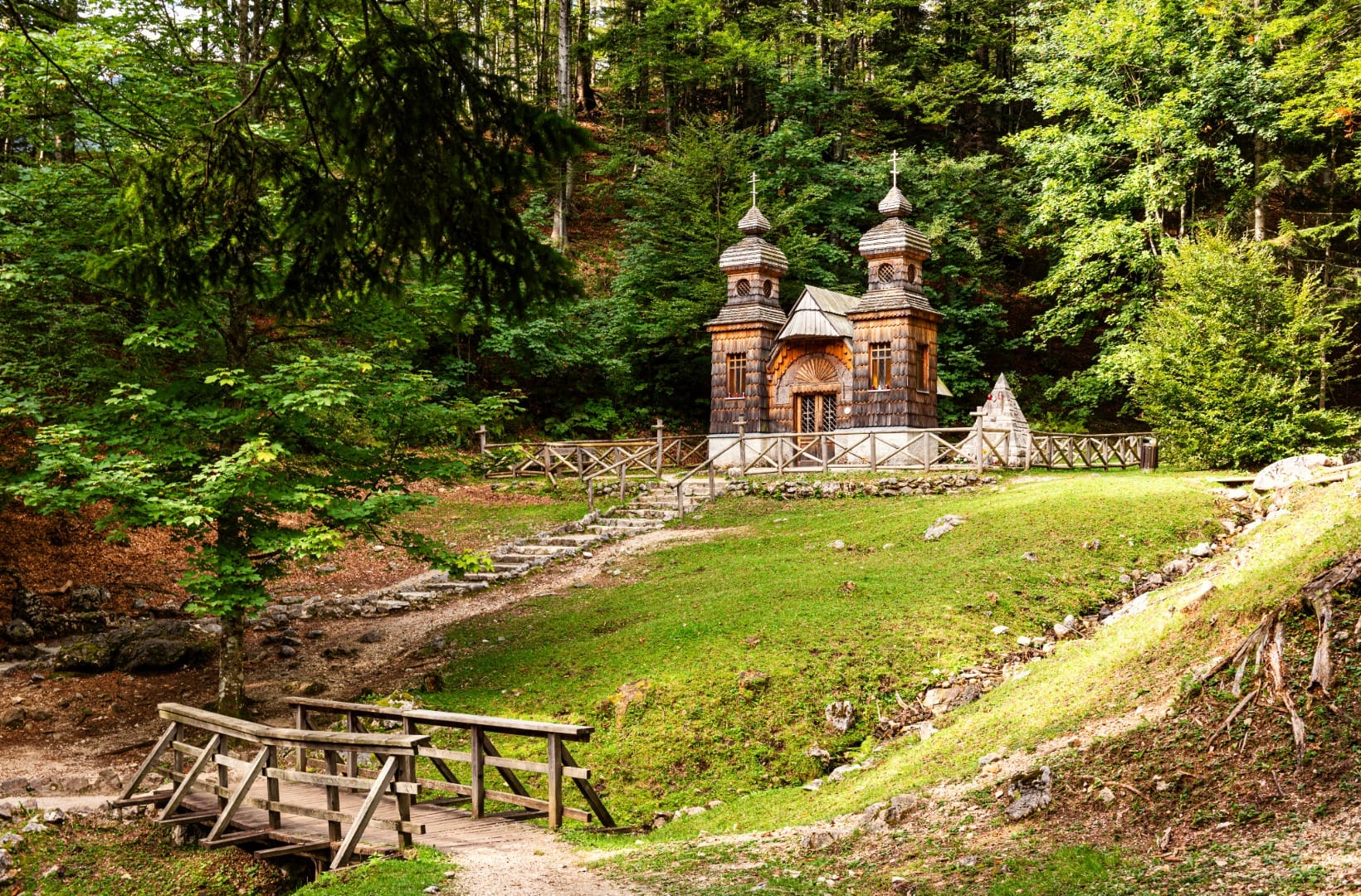
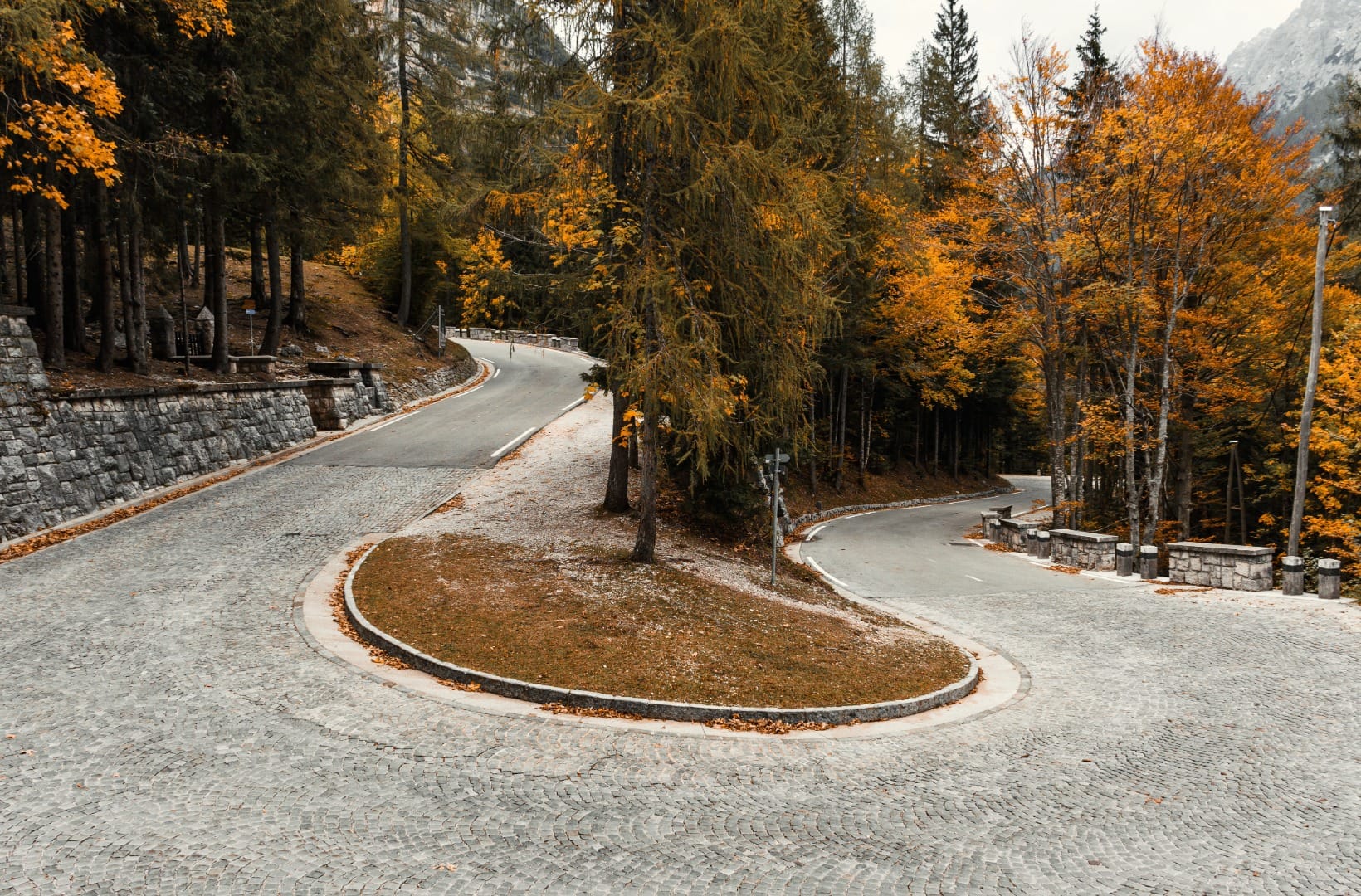
The north side drops away in the 24 cobbled hairpins of the original Russian Road — river-stone bends that are rough, cambered, and genuinely slippery when wet, so brake on the straights and roll the corners. About 5 km down, in the trees between hairpins 8 and 9, is the Ruska kapelica, the wooden Russian Chapel built in 1916 by the surviving prisoners in memory of the roughly 100 who died in an avalanche while building the road. A few hundred metres further, at km 38.75, is Mihov dom — food, a terrace, and beds if you want them. Rest here, then decide: ride back over the pass to Bovec, freewheel the last 12 km down to Kranjska Gora, or wait for the bus.
Map
The map shows the 39 km from Bovec: up the Soča valley through the gorge and Soča village to Trenta, the 26 hairpins to the 1,611 m pass, and the drop down the cobbled north side to the Russian Chapel and Mihov dom.
Travel insurance
Many standard policies exclude road cycling in the mountains and fast descents — worth checking your cover before a day like this.
Photos along the way
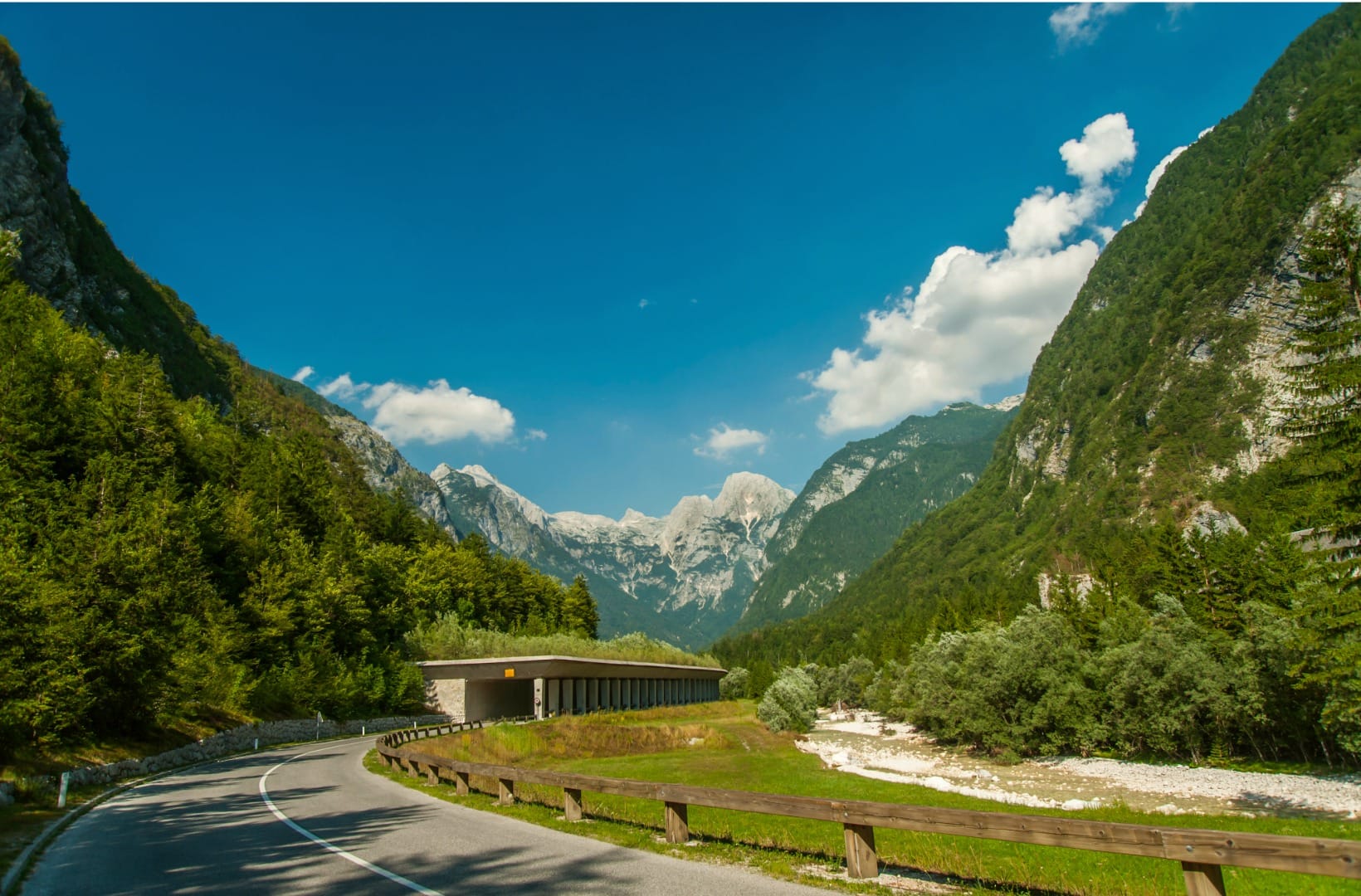
Best time
When to ride it
- Mid-June to early July: the road is reliably clear of snow on both sides, the waterfalls off the walls are still full, and the days are long enough to start very early.
- September: the most stable weather of the year, thinner traffic once the school holidays end, and the larch on the upper climb turning gold.
- Avoid July–August afternoons: peak traffic on a narrow road. If you ride in high summer, be at the pass by 9–10am and heading down before the buses and the storms.
Safety & warnings
Traffic is the real hazard
The pass is narrow, has no shoulder, and carries a heavy stream of tour buses, motorhomes and motorbikes from mid-morning in summer, much of it on blind cobbled hairpins. This is the one thing that can hurt you here. Start from Bovec at first light and aim to be over the top by mid-morning, or ride the bus one way and pedal the other.
Before you set off
- The descent: the north-side hairpins are cobbled, cambered and slippery when damp. Brake on the straights, keep your speed down through the bends, and expect your hands to get cold.
- Pacing and fuel: the climb from Trenta is 13 km with no let-up and no water. Fill up and eat in Trenta, and carry more than you think for a hot day at altitude.
- Weather: afternoon thunderstorms are the summer norm and snow can sit on the shaded bends into June. Carry a windproof layer even on a hot day — the descent from 1,611 m is genuinely cold.
- Gearing: a compact chainset and a 32 or 34 sprocket make the difference between riding and walking the 12% ramps.
Logistics
By car
Park in Bovec — there is free and paid parking around the centre and the sports park. The ride starts and, if you retrace it, ends there. Leaving a car at Kranjska Gora and starting from that side instead gives you the cobbled hairpins first, but a longer, busier climb.
Public transport and getting back
From 1 June to 30 September a bus runs Kranjska Gora – Vršič Pass – Trenta – Bovec several times a day; it is the simplest way to make this a one-way ride, either riding up and busing back or busing to the pass and riding down. Bike space is limited, so check the current timetable and be at the stop early. Without the bus, the options from Mihov dom are to ride back over the pass to Bovec (about 39 km and 700 m of climbing in reverse) or to freewheel the last 12 km down to Kranjska Gora and travel around from there.
Renting a car for the region
A car makes the Soča valley and the Kranjska Gora side join up on the days either side of this ride — the Vršič bus only runs in summer, and the valleys are otherwise slow to link by public transport.
Search rental cars — Slovenia & the Soča valley
Author note: if you only want the climb and not the logistics, ride Bovec to the pass and back the same way — about 66 km with one big climb, and you still see the Kugy monument and the top.
How this trail fits into routes
This is the hard counterpart to the flatter valley rides — the Soča Valley ride from Bovec to Kobarid is the gentle day downstream from the same town, and the Bled–Bohinj Cycling Trail the easy one over the hills. Where those are about covering ground, this one is about a single climb.
- From the top, on foot: Slemenova Špica starts right at the pass — a short, huge-view walk if your legs have anything left.
- The gorge you rode past: the Great Soča Gorge Trail, and up a side valley off the Trenta road, Lake Krn via Lepena.
- The other side of the pass: Kranjska Gora essentials — Lake Jasna, Zelenci and the Krnica valley, where the north-side descent drops you.
- The region: Alpine Slovenia.
FAQ
How hard is this ride?
Hard — the hardest on this site. It is only 39 km one way, but 20 of those are flat valley and the rest is a 1,340 m climb, 13 km of it unbroken at around 7% with 11–12% ramps, at altitude. Add the return and it is a full, demanding day. Strong riders with low gearing enjoy it; it is not a first big climb.
Which side has the cobbles and the Russian Chapel?
The north (Kranjska Gora) side. All 24 of its hairpin bends keep the original cobbled surface, and the Russian Chapel sits among them between hairpins 8 and 9. This route climbs the smooth Trenta side, crosses the pass, and drops onto the cobbled side to reach the chapel and Mihov dom.
Is it a loop?
No. It ends at Mihov dom on the far side of the pass, 38.75 km from Bovec. To get back you ride over the pass again to Bovec, continue 12 km down to Kranjska Gora, or take the summer shuttle bus.
When is the road open?
Roughly late May to late October, depending on snow. Through winter it is closed above the huts because of avalanche danger, and the shaded north-side bends can hold snow into June. Always check current road status before you go.
Road bike or gravel bike?
A road bike is right — the whole route is paved, including the cobbled hairpins. Tyres of 28 mm or wider and a compact chainset with a 32 or 34 sprocket make the cobbles and the steep ramps much more pleasant.
Conclusion
Vršič is the climb people come to the Soča valley to do. It is not long and it is not technical, but it is a real mountain pass with a real history, and the traffic means it rewards an early start more than almost any ride we cover. Get up at dawn in Bovec, be over the top before the buses, and take your time on the cobbled side down to the chapel and a plate of something at Mihov dom.