
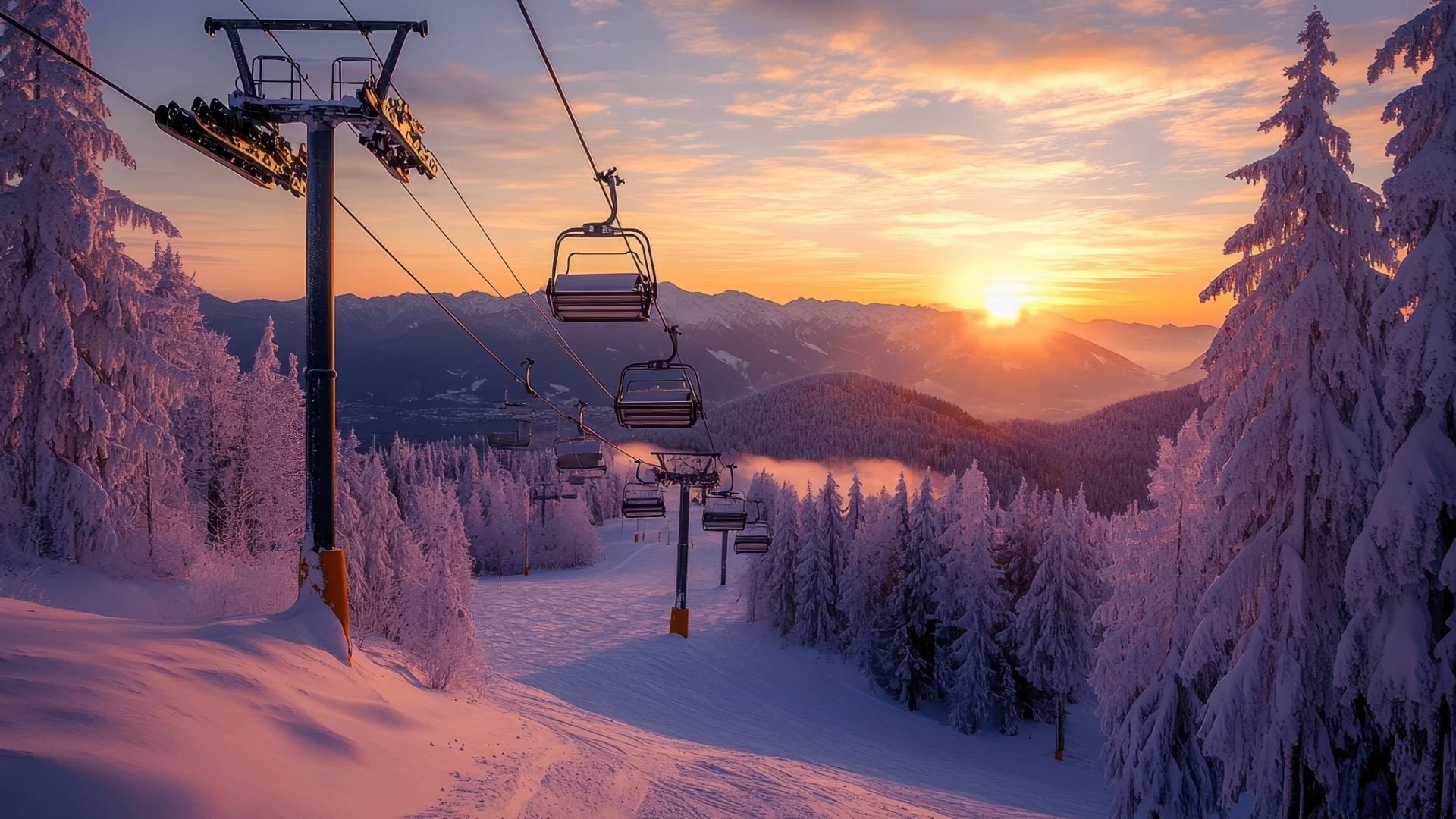
Skiing in Slovenia: Resorts, Costs & Which One Fits You
Quick Overview – Skiing in Slovenia
Slovenia is small enough that you can be on a lift within two hours of Ljubljana Airport, and varied enough that the right resort depends entirely on what kind of week you want.
- Biggest and most complete: Kranjska Gora (18 slopes, six chairlifts, World Cup slalom hosting)
- Best views: Vogel, above Lake Bohinj
- Closest to Ljubljana: Krvavec (under an hour from the capital)
- Best for families and value: Cerkno, Stari Vrh, Golte
- Highest and most dramatic: Kanin, above Bovec, Slovenia’s highest resort at 2,200 m
- Best for night skiing: Mariborsko Pohorje, one of Europe’s longest floodlit runs
- Season: early December to late March/early April, with January–February the safest window for snow
Slovenia will never be Austria or the French Alps in scale, and it doesn’t try to be. What it offers instead is a genuinely different kind of ski trip: short drives between resorts, lift tickets that are noticeably cheaper than the big Alpine names, and a Julian Alps backdrop that looks the part without the queues. The trade-off is honest too — most Slovenian resorts are smaller, a few of the lower ones lean on snowmaking more than natural snow, and if you want a week of pure high-Alpine terrain, this isn’t that trip.
How Slovenia’s Ski Scene Actually Works
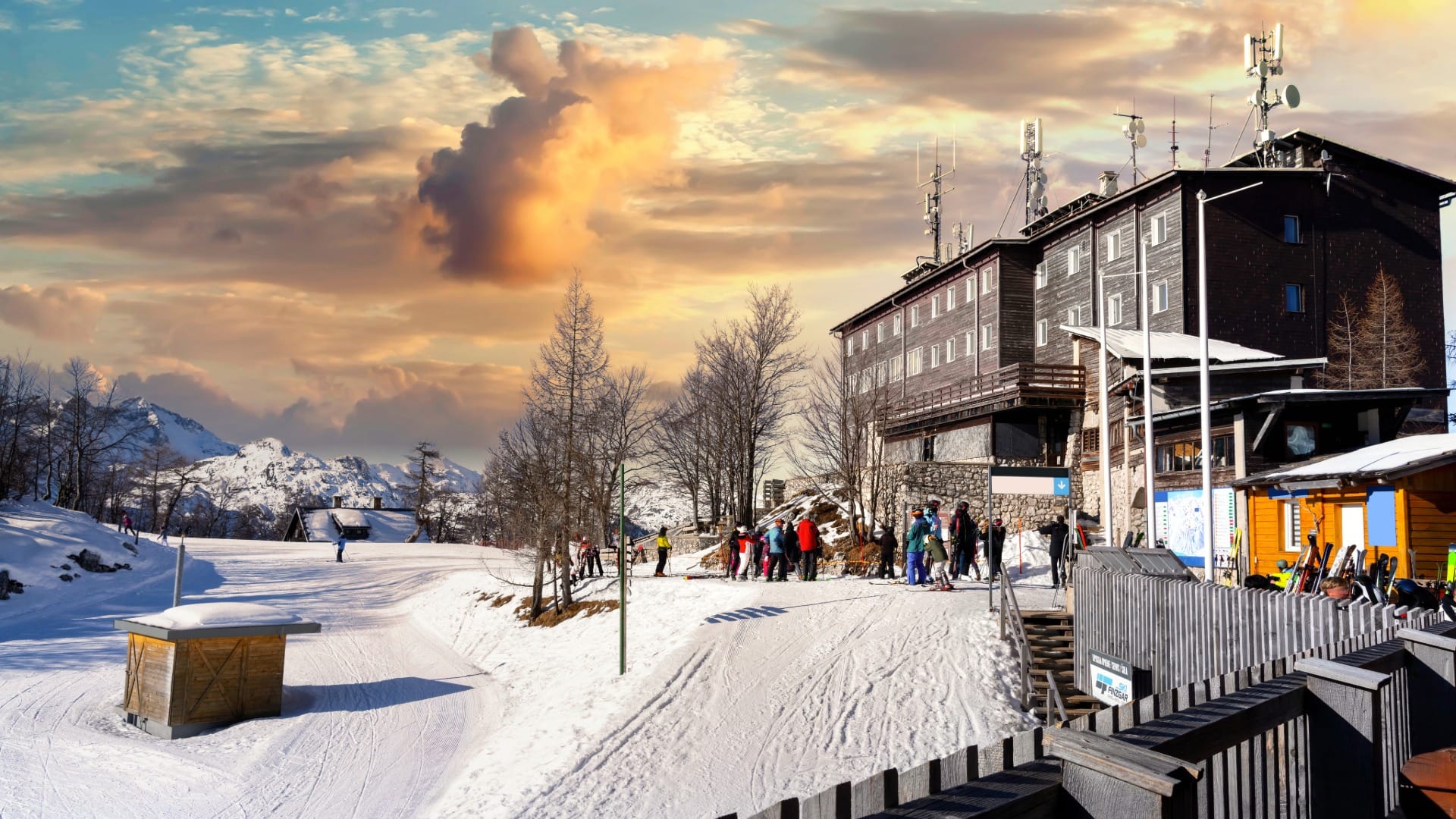
There’s no single “ski capital” the way there is in Austria. Instead there’s a handful of proper resorts spread across three pockets of the country: the Julian Alps in the northwest (Kranjska Gora, Vogel, Kanin, Krvavec), the Kamnik-Savinja Alps and Pohorje hills further east (Rogla, Golte, Mariborsko Pohorje), and a scatter of smaller, locally-loved hills (Cerkno, Stari Vrh, Soriška Planina, Kope) that rarely see international crowds. None of them are more than a 2–3 hour drive from each other, which means a base-and-day-trip strategy works well here in a way it doesn’t in bigger mountain ranges.
Slovenia Trip Starter Kit
Plan Slovenia without the usual route mistakes — a free, practical starter guide sent straight to your inbox.
Get the free guide →The Resorts, One by One
Kranjska Gora — the flagship
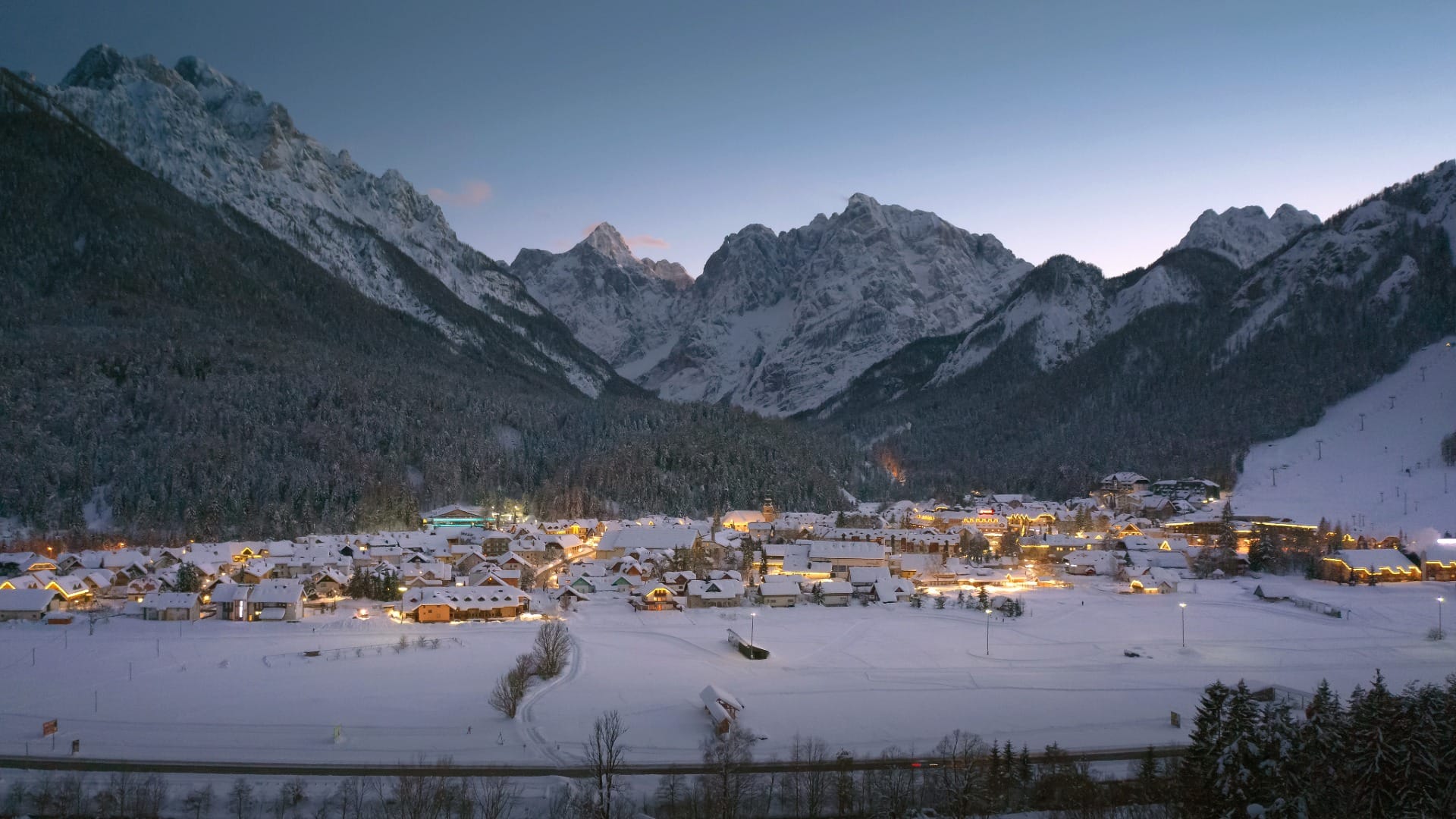
Kranjska Gora is Slovenia’s best-known resort, and for good reason: 18 slopes served by six chairlifts and thirteen drag lifts, a real ski-town atmosphere, and enough terrain variety to keep beginners and intermediates happy for a full week. It hosts a Ski World Cup slalom race most winters, which tells you something about slope quality even if you’re nowhere near that level. It sits close to Lake Bled, Vintgar Gorge and Lake Bohinj, so non-ski days have real options. Check current lift prices and conditions at the official Kranjska Gora site.
Where to stay in Kranjska Gora
Prefer booking on a specific platform? Use the options below to search stays in Kranjska Gora.
Vogel — panoramic, above Bohinj
Vogel is reached by cable car from the shore of Lake Bohinj, which is most of the appeal in one sentence: you ski with the lake spread out below and Triglav National Park all around. It’s smaller than Kranjska Gora and better suited to intermediate skiers than absolute beginners on its upper runs, but the setting is arguably the most beautiful of any Slovenian resort. Check current cable car and lift prices at the official Vogel site.
Krvavec — closest to Ljubljana
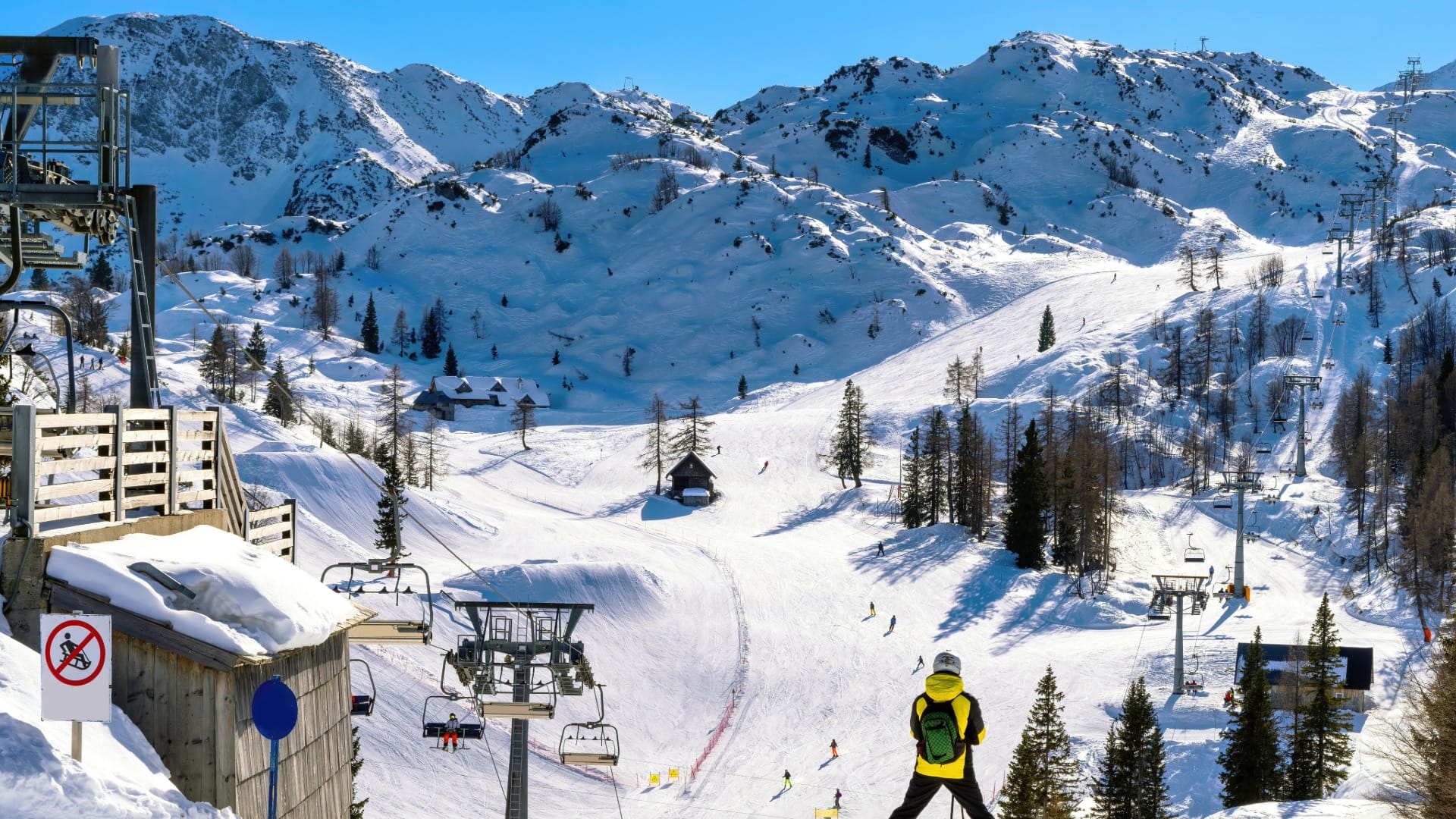
If your trip is city-based and skiing is a day out rather than the whole point, Krvavec is the practical answer — under an hour from the capital, open terrain above the treeline, and no need to change accommodation at all. It’s a legitimate day-trip resort, not a downgrade. Check current lift prices at the official Krvavec site.
Mariborsko Pohorje — night skiing, easy access
Pohorje, above Maribor, is built around accessibility: gentle, forested slopes and one of the longest floodlit night-ski runs in Europe. It’s the pick if you want to combine skiing with Maribor’s old town and the surrounding wine hills rather than a purely alpine week. Check current lift and night-skiing prices at the official Pohorje site.
Rogla — beginner-friendly and freestyle
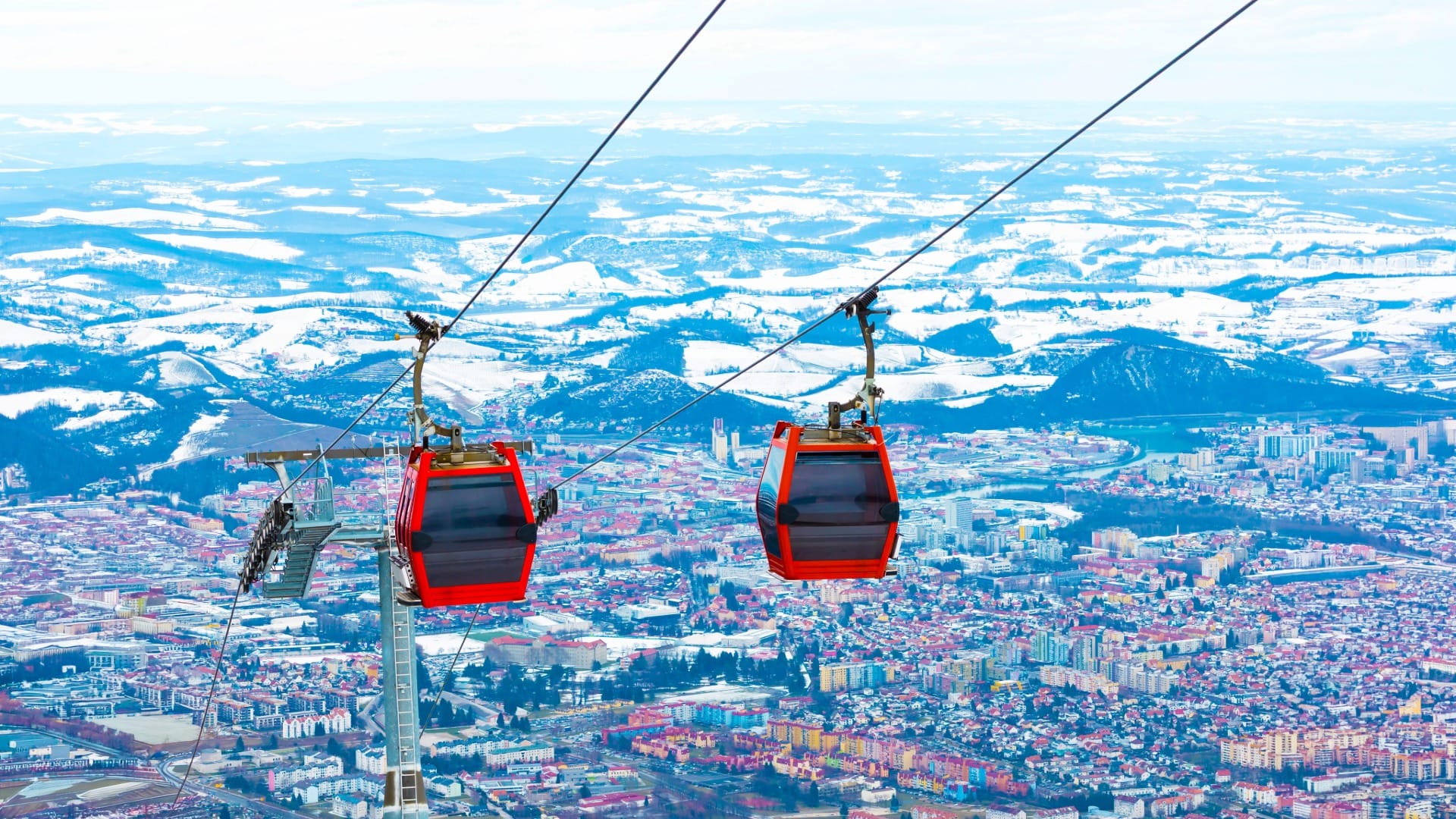
Rogla sits at a modest 1,050–1,517 m with 13.5 km of slopes across 13 lifts. It’s gentler terrain than the Julian Alps resorts, with a strong freestyle park, and tends to hold snow reliably because of consistent snowmaking infrastructure rather than raw altitude. Check current lift prices at the official Rogla site.
Cerkno — the repeat award-winner
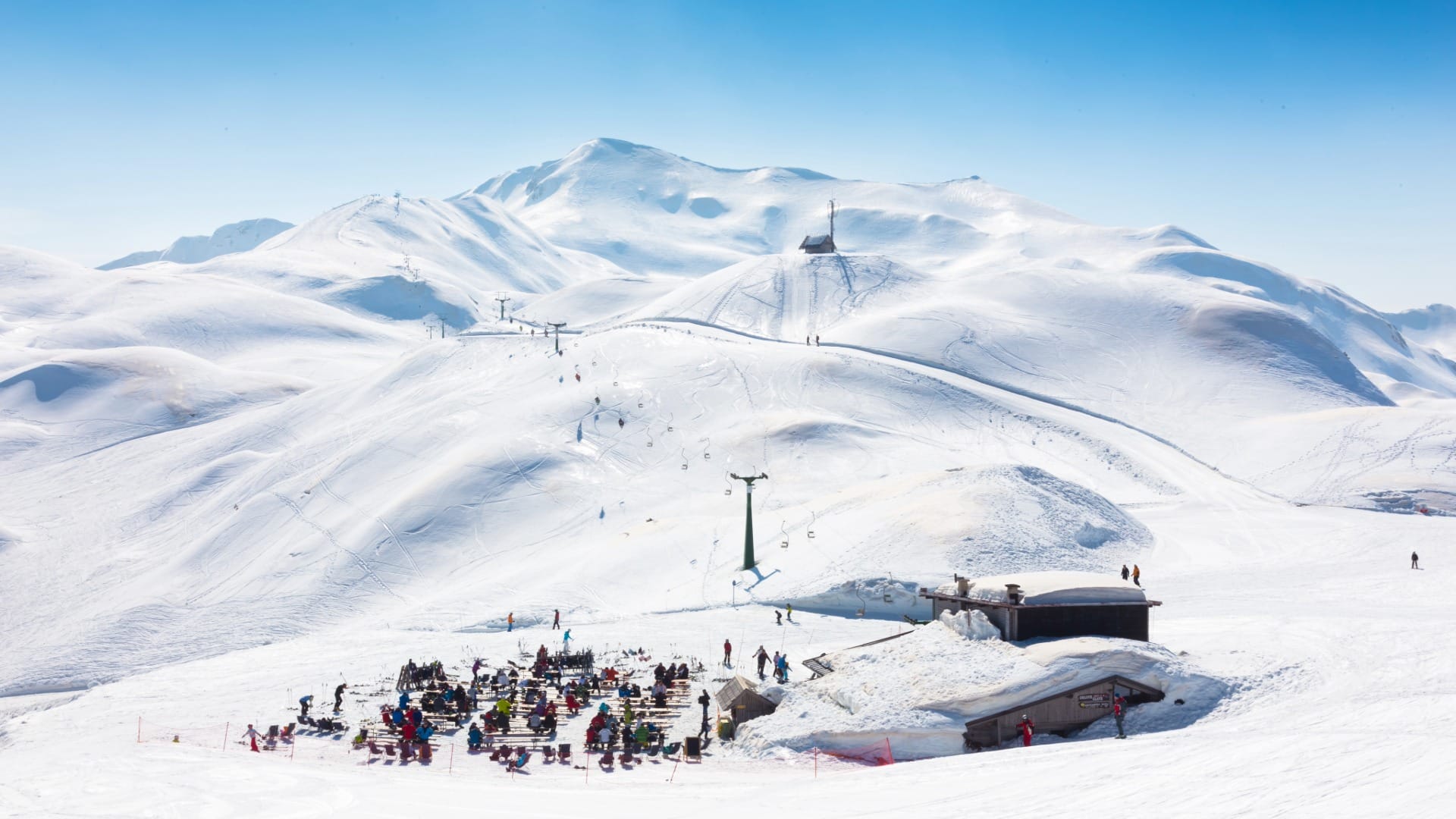
Cerkno has been voted Slovenia’s best ski resort in several seasons over the past decade, largely on the strength of grooming and family-friendliness — 18 km of slopes plus 5 km of cross-country tracks and a dedicated snowboard park. It’s a sensible pick if skiing quality matters more to you than resort size. Check current lift prices at the official Cerkno site.
Kanin (Bovec) — highest, most dramatic, least convenient
At 2,200 m, Kanin is Slovenia’s highest resort — 30 km of slopes with 1,152 m of vertical drop, reached by cable car from the Soča Valley town of Bovec. The trade-off for the altitude and the views is access: it’s a real detour from the main ski areas, and worth it mainly if you’re already basing yourself in the Soča Valley rather than treating it as a quick add-on. Check current cable car prices and operating status at the official Kanin site before you drive up — the cableway doesn’t run in strong wind.
Smaller local resorts worth knowing
Stari Vrh (12 km, near Škofja Loka, close to Ljubljana) and Golte (12.8 km, mostly beginner-to-intermediate forested trails) are both genuinely good family options that rarely appear on international lists — often quieter and cheaper than the bigger names for exactly that reason. Check current prices at the official Stari Vrh and Golte sites.
Guided winter tours & activities
Snowshoeing, guided winter hikes and ski touring around Bled and the Julian Alps — worth it when the trails are under snow and route-finding or avalanche judgement is safer left to a guide.
Travel insurance
Standard policies often exclude hiking and mountain activities — skiing and off-piste terrain included. Worth checking your cover before you book lift tickets.
Costs — Honest Numbers
For the 2026 season, daily lift tickets at the resorts near Bled run roughly: Vogel around €45, Krvavec €45–€49, and Kranjska Gora around €49. That’s meaningfully below equivalent day passes in Austria or France. What adds up quickly is everything around the lift ticket — rental gear, lessons if you need them, and accommodation in a proper ski town — so budget the full package, not just the pass.
When to Go
The season generally runs from early December to late March, occasionally into early April at the higher resorts. Mid-winter — January into February — is the safest window if reliable snow matters more to you than avoiding the coldest weather. Lower-elevation resorts lean heavily on snowmaking to bridge thin natural-snow stretches, which mostly works but isn’t a guarantee in an unusually mild year. If snow reliability is your top priority, Kanin and Vogel’s higher terrain is the safer bet over Rogla or Pohorje’s lower slopes.
Getting There — Do You Need a Car?
For most of these resorts, yes. Kranjska Gora, Vogel and Kanin in particular are far easier with a car than relying on public transport connections, which thin out in winter exactly when you need them most. See our guides on driving in Slovenia and renting a car for the practical side, including winter tyre and chain requirements that are genuinely enforced on mountain roads here.
Compare rental cars across Slovenia
See real final prices, deposits and winter-tyre requirements from multiple providers in one search.
Is skiing in Slovenia expensive compared to Austria or Italy?
Generally no — lift tickets run noticeably cheaper than the big-name Alpine resorts across the border. It’s not a budget destination once you add rental gear, lessons and a proper ski-town stay, but for the same standard of terrain and infrastructure, Slovenia comes in lower than its neighbours.
Conclusion
Slovenia’s ski scene rewards people who don’t need the biggest resort in the Alps — just a good one, close to a lake, a gorge, or a wine region you can spend a rest day in. Pick Kranjska Gora if you want the complete package, Vogel or Kanin if the view and the altitude matter most, and one of the smaller hills if you’d rather ski without the crowds.