
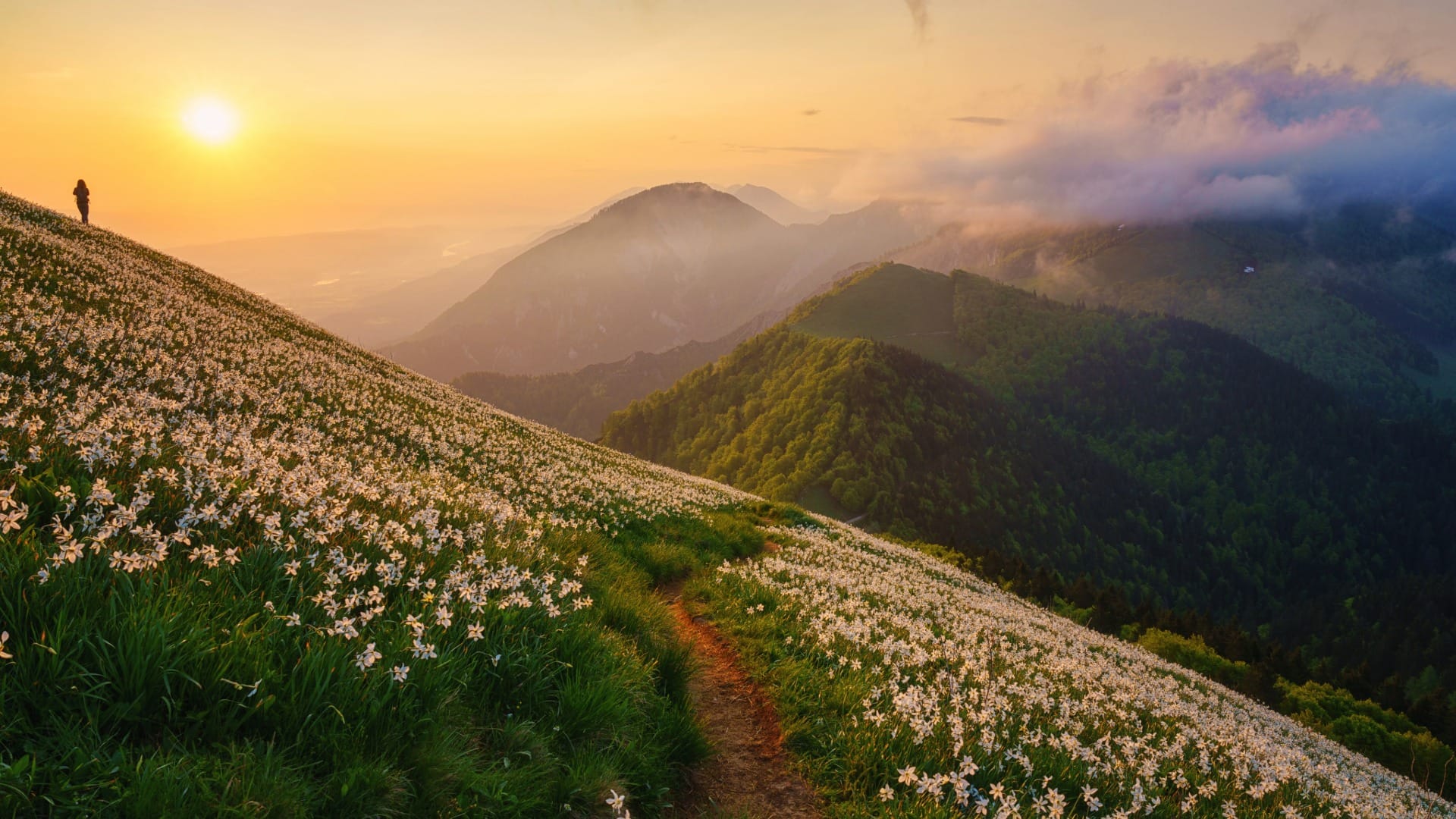
Golica Daffodil Trail from Planina pod Golico
Alpine Slovenia
Where to base yourself
Search places to stay near here and book directly on Booking.com.
Find a place to stayGolica Daffodil Trail from Planina pod Golico
Quick Overview – Golica Daffodil Trail
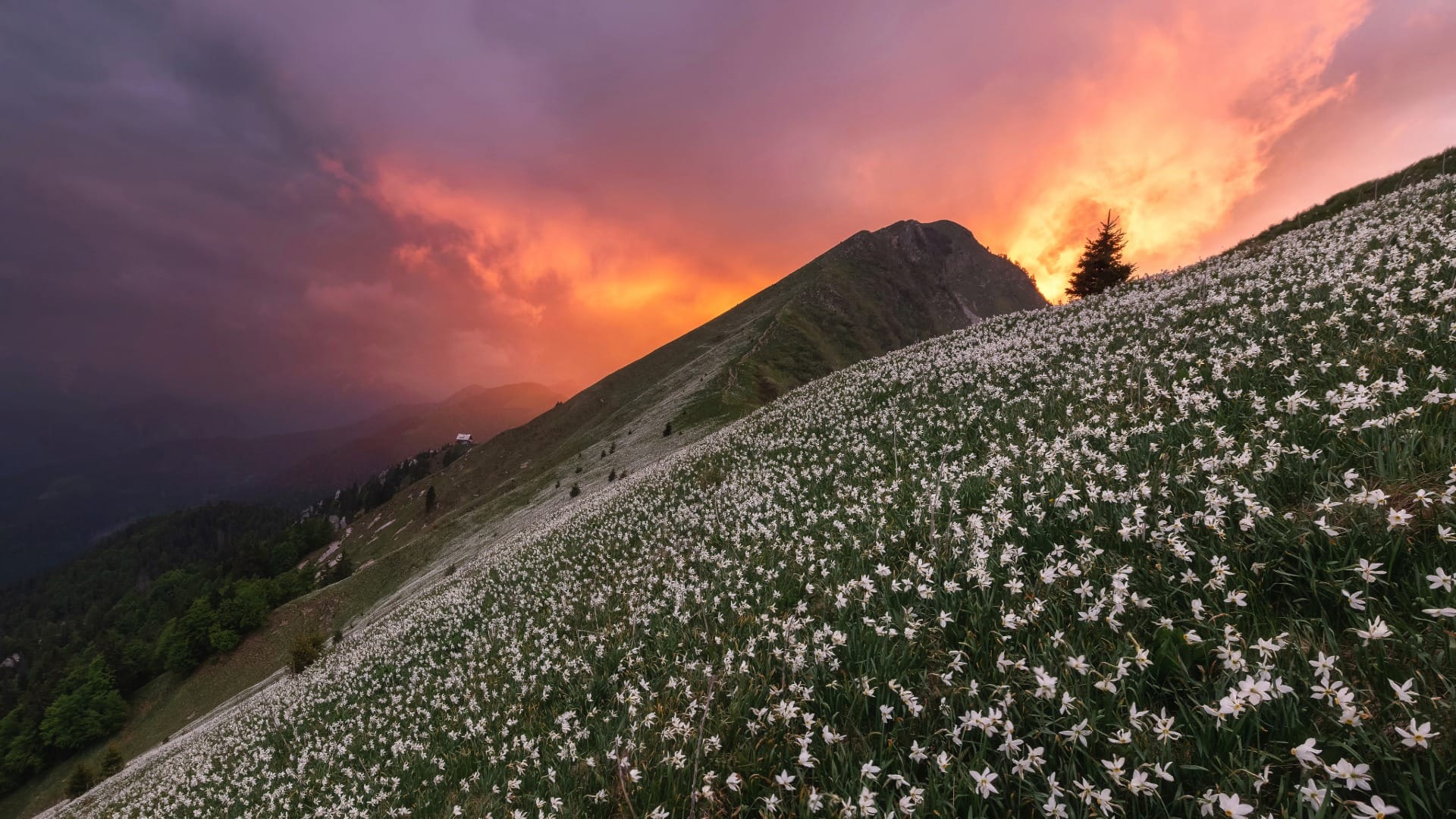
A steep climb through meadow and spruce forest to a Karavanke summit that, for about two weeks in late April or May, turns into one of the most photographed sights in Slovenia — slopes covered edge to edge in wild white narcissus. Outside bloom season it’s still a serious, rewarding summit hike.
Trade-off: 855 m of climbing in under 4.5 km one-way is a real workout, and during peak bloom the trail gets seriously crowded. We send people here specifically for the flowers, in the narrow window when they’re actually blooming — check ahead, because the timing shifts year to year.
- Type: hard summit climb, famous for spring wildflowers
- Region: Alps (Karavanke, above Jesenice)
- Works well with: a dedicated half-day trip timed to the daffodil bloom, or a serious summit hike any other time of year
Trail stats
- Distance: ~8 km round trip
- Elevation gain: 855 m
- Time: ~4–5 hours
- Difficulty: Hard (steady, occasionally steep climb; trekking poles genuinely help)
Slovenia Trip Starter Kit
Plan Slovenia without the usual route mistakes — a free, practical starter guide sent straight to your inbox.
Get the free guide →What to expect
Golica is genuinely two different hikes depending on when you go. In bloom season, the upper meadows turn into a white carpet that draws hikers from across the region — beautiful, but busy, and the flowers are fragile enough that staying on the marked path really matters. Outside those two or three weeks, it’s simply a steep, satisfying Karavanke summit with wide views and far fewer people.
If the climb sounds like too much but you still want a high-altitude view without the effort, Slemenova Špica from Vršič Pass gains a third of the elevation for a similar payoff.
Route in detail
1) Planina pod Golico and the walk to Betel
Start at the parking area in Planina pod Golico (980 m) and follow the marked trail through the small settlement of Betel. The path climbs steadily from the very start — there’s no flat warm-up section here.
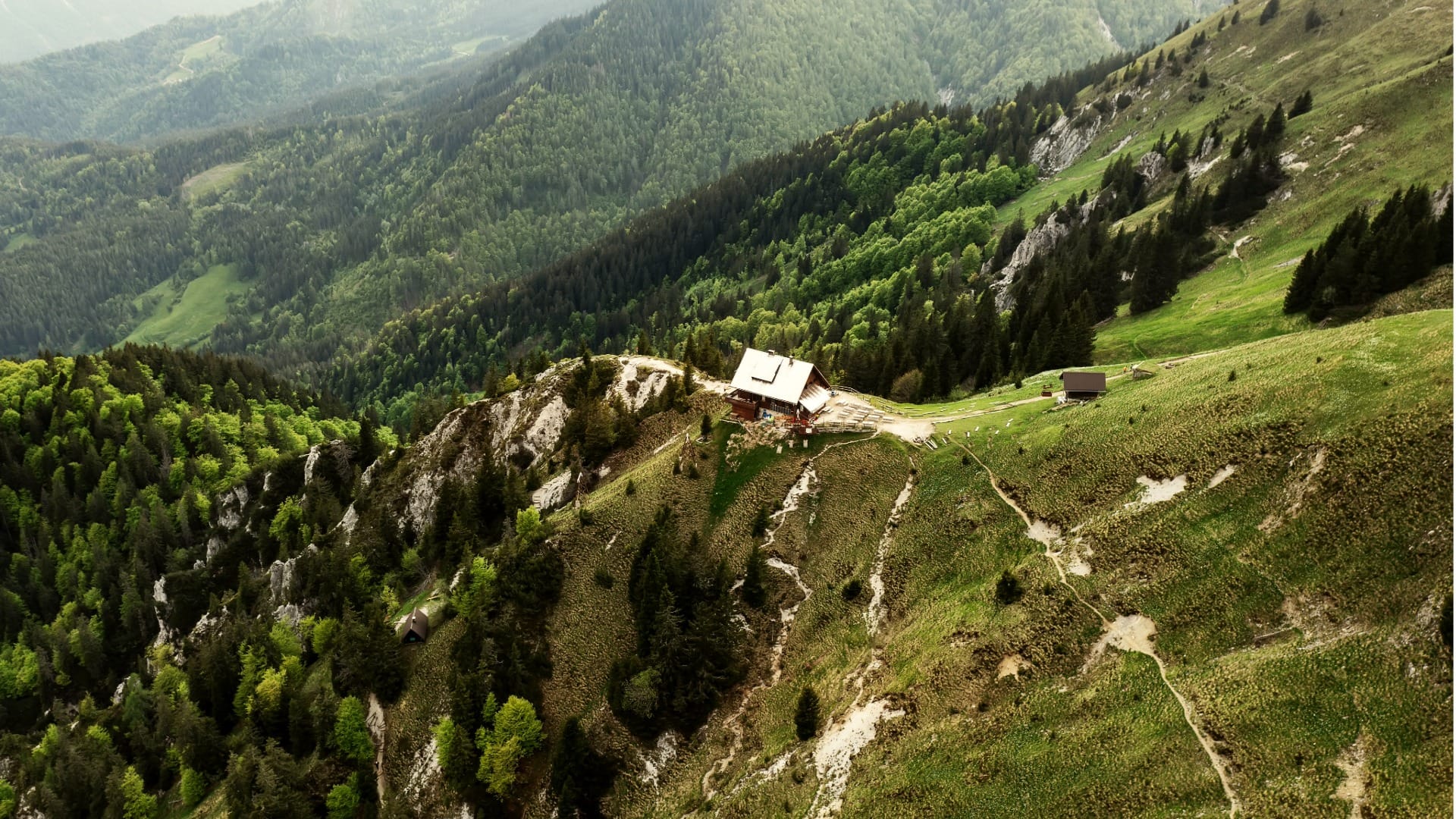
2) Fenec and the climb to Koča na Golici
The trail continues past the Fenec refreshment stop and climbs through meadow and spruce forest to Koča na Golici (1,582 m), a mountain hut that makes a natural break point — about 600 m of the day’s climbing is done by this point.
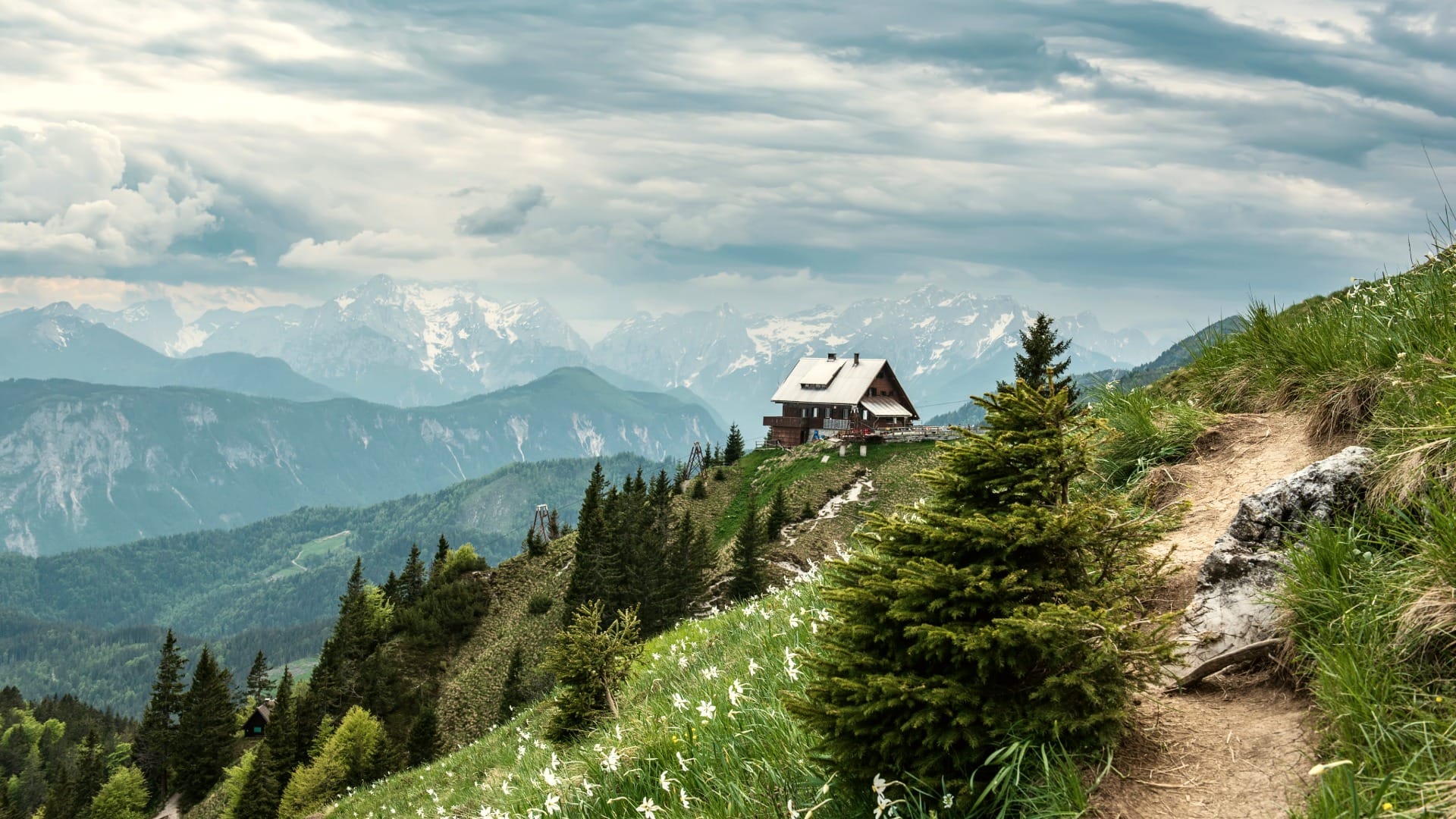
3) The final push through the daffodil meadows
From the hut, the last 255 m of climbing crosses the open, steep meadows that make Golica famous — in season, this is where the daffodils cover the slope from trail edge to trail edge. The gradient here is the steepest part of the whole route.
4) The summit
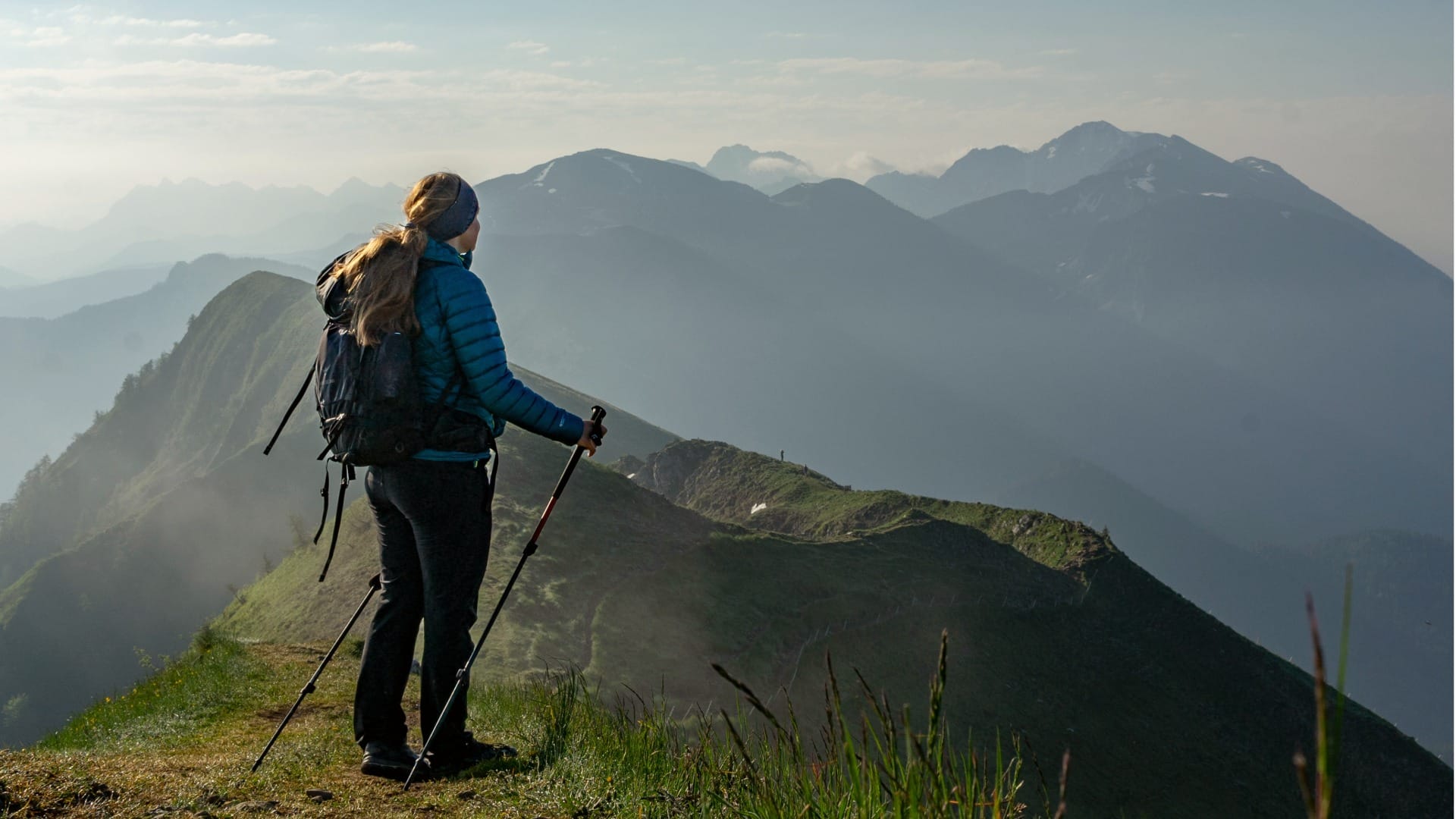
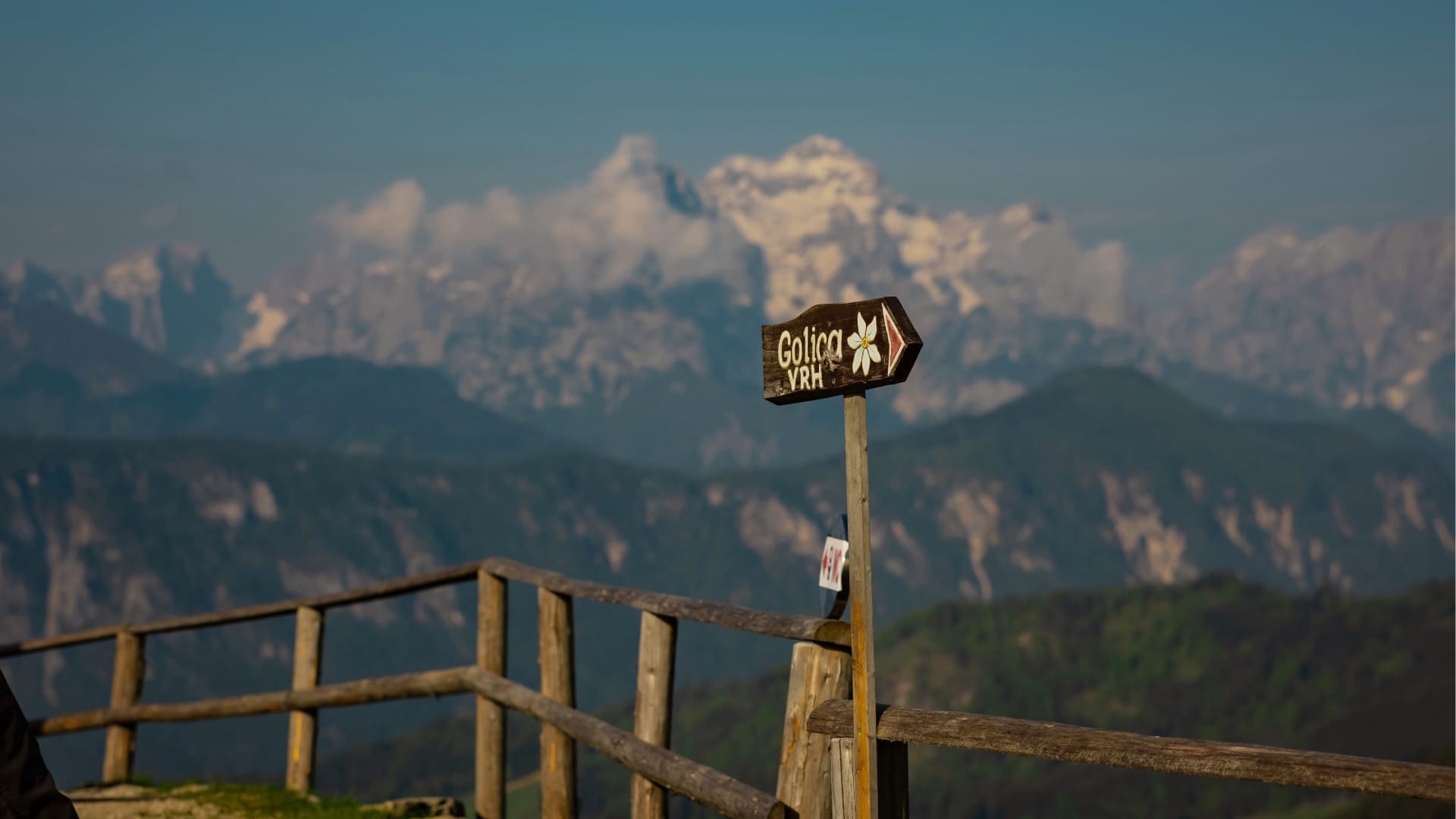
At 1,835 m, the summit opens onto a wide panorama: Lake Wörthersee and Austrian peaks to the north, Triglav and the rest of the Julian Alps to the south, and Stol, Begunjščica and the Košuta ridge running east along the Karavanke.
Travel insurance
Standard policies often exclude hiking and mountain activities — worth checking your cover before a day like this.
Map
The map shows the climb from Planina pod Golico, past Koča na Golici, to the Golica summit — the same path serves as both ascent and descent.
Best time
- Late April to mid-May: the daffodil bloom — the exact window shifts year to year with the spring weather, so check recent reports before planning a special trip.
- Weekday mornings during bloom season: a genuinely quieter way to see the flowers than a weekend afternoon.
- Summer and early autumn: no flowers, but the clearest views and the quietest trail.
Safety & warnings
- Steep, sustained climb: trekking poles are genuinely useful here, not just a nice-to-have.
- Crowds in bloom season: the narrow trail through the flower meadows can back up on a sunny weekend — start early.
- Stay on the marked path: the daffodils are a protected, fragile attraction — walking off-trail damages exactly what people come to see.
Logistics
By car
Planina pod Golico is a short drive above Jesenice — easy to reach, though parking fills up fast on peak bloom weekends.
Public transport
Jesenice has a train station on the main line, but Planina pod Golico itself requires a further drive or taxi — public transport alone isn’t practical for this trailhead.
Renting a car for trail days
Many of the trails on our portal are realistically done by car: early starts, flexible returns and last-mile forest or valley access are hard to match with buses.
Search rental cars — Slovenia & Ljubljana Airport
Author note: if you’re timing this for the bloom, book flexible dates if you can — the exact peak week isn’t fixed far in advance.
How this trail fits into routes
Golica is a strong pick for anyone building a spring trip to Slovenia specifically around the daffodil bloom, or a serious Karavanke summit day at any other time of year.
- Same region, easier: Slemenova Špica from Vršič Pass gives a comparable high-alpine view for a fraction of the effort.
- Same region, more effort: Stol via Žirovniška pot, the highest peak of the Karavanke, is the harder option nearby.
Conclusion
Golica is worth building a trip around if the timing lines up — there’s genuinely nothing else in Slovenia quite like a mountainside turned white with wild narcissus. Outside bloom season it’s still a serious, satisfying climb with one of the better summit views in the Karavanke. Either way, respect the climb and stay on the path.